
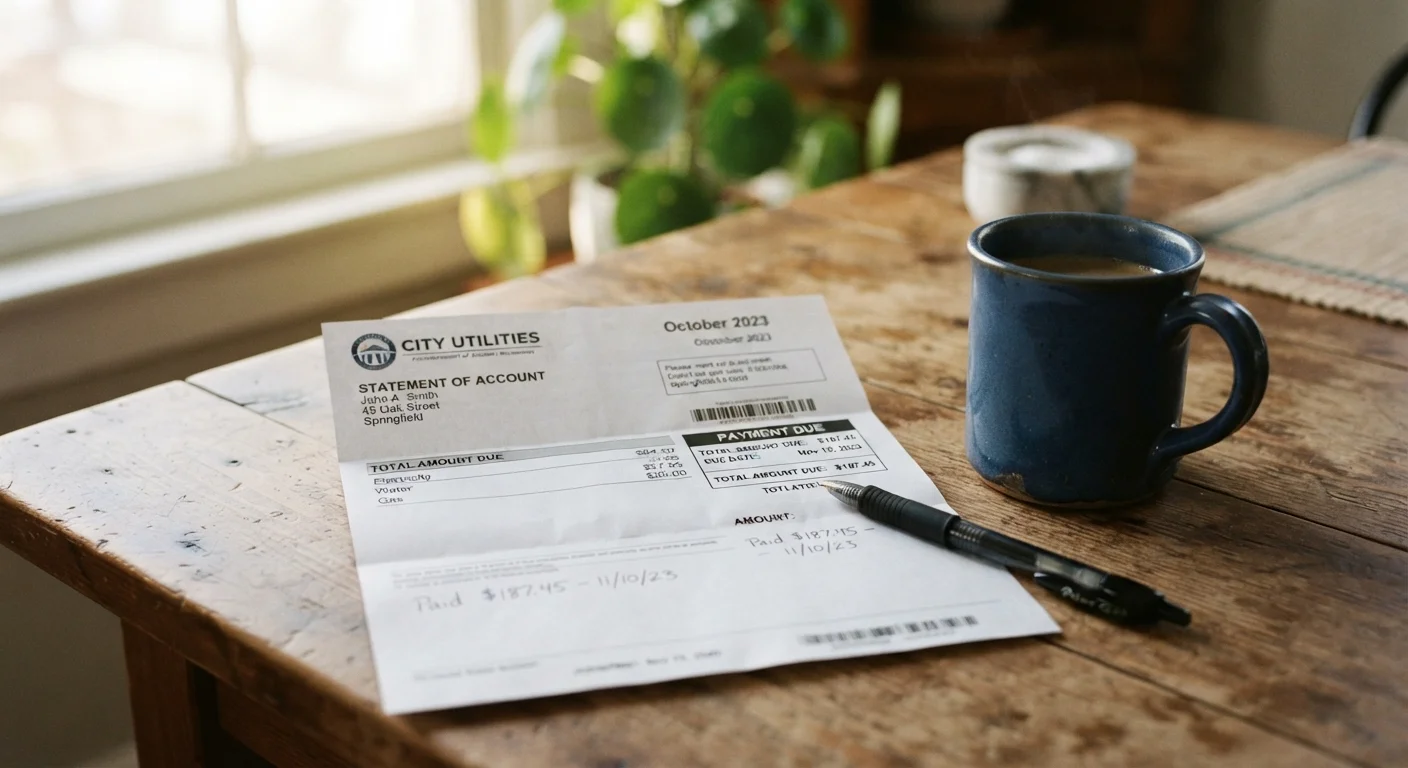
What the amount due does not tell you
Most people scan a utility bill for one number and stop there. That total reflects how much you owe, but it says almost nothing about why. Two households with identical square footage and the same climate can pay the same dollar amount for completely different reasons: one has low usage but pays a higher per-unit rate, the other has high usage but benefits from a lower introductory tier. Without reading further, you cannot tell the difference.
The usage figure, measured in kilowatt-hours for electricity, therms for natural gas, or gallons for water, is the more diagnostic number. It strips out rate changes and seasonal pricing adjustments, so it gives you a cleaner picture of your home's actual consumption behavior over time.
Reading your usage history
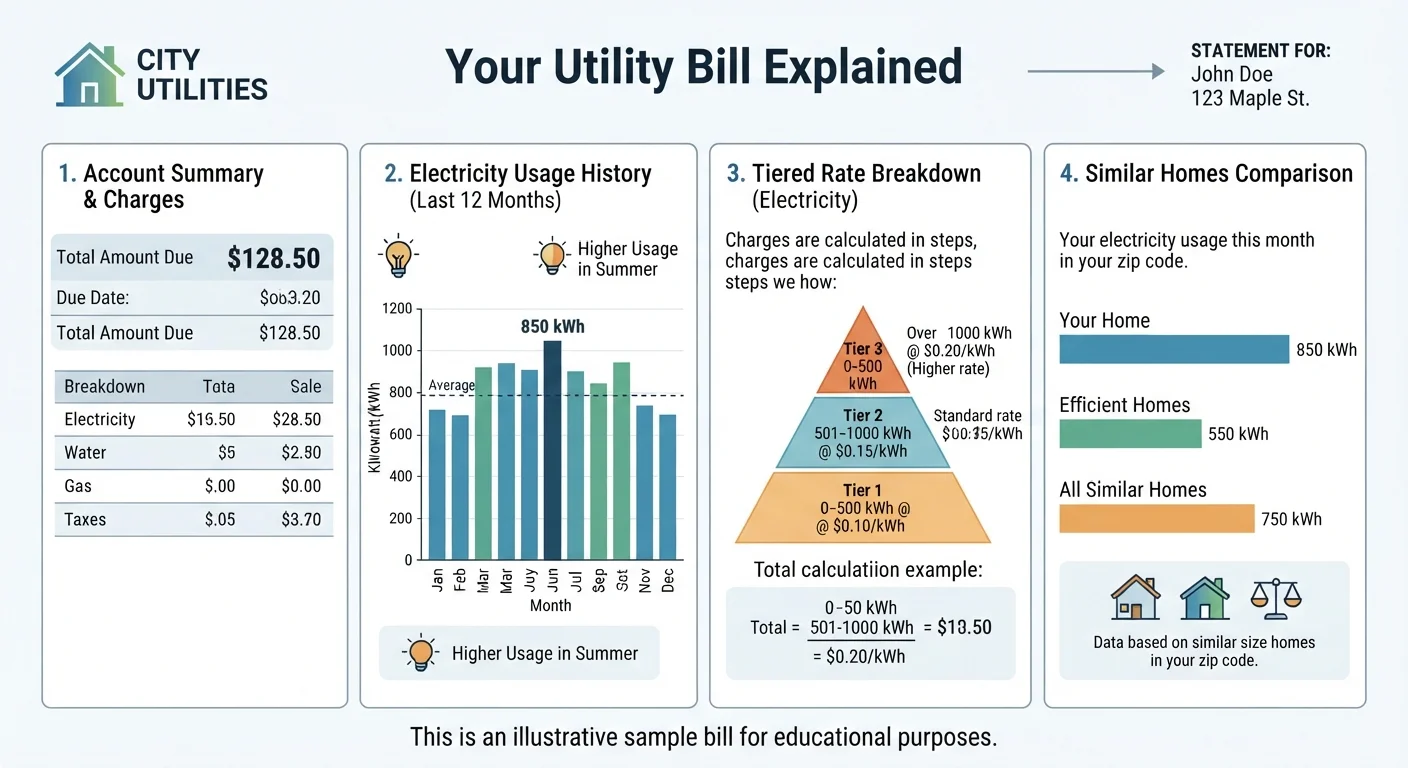
Most utility bills include a bar chart showing your usage over the past 12 to 24 months. This section rewards attention. A gradual upward trend across comparable months, for example, January this year versus January last year, can indicate that an appliance is aging and working harder, that weatherization has deteriorated, or that a new occupant or device has changed household patterns.
A sudden spike is different. If your kilowatt-hour usage jumps 30 percent in a single billing cycle with no obvious change in behavior, the cause is usually specific: a water heater element beginning to fail, a refrigerator compressor cycling too often, or a heating or cooling unit running continuously because of a thermostat fault. The reasons heating bills spike in winter often trace back to exactly this kind of equipment or insulation issue.
Water bills deserve the same scrutiny. A single running toilet can waste 200 gallons or more per day without making noise that draws attention. If your water usage reading is high and steady across months, a slow leak is worth ruling out before assuming the household is simply using more water.
Understanding rate structures and fees
The rate section of your bill shows what you pay per unit of usage and whether tiered pricing applies. Tiered electricity rates charge one price per kilowatt-hour up to a baseline amount, then a higher price for anything above it. If your bill consistently shows charges in the upper tier, you may be paying a premium on a significant portion of your usage.
Time-of-use rates, available from some utilities, charge more during peak demand hours and less during off-peak hours. If your bill includes these rate codes and you have flexibility in when you run major appliances, the usage section can help you evaluate whether shifting laundry or dishwasher cycles would change your costs.
Compare the same month, not adjacent ones
January and February can differ significantly in heating degree-days, making month-to-month comparisons misleading. When reviewing your usage history, compare each month to the same month in the prior year for a cleaner read on whether your consumption is actually changing.
Fixed charges, sometimes labeled a "service charge" or "customer charge," appear on most bills regardless of how much energy or water you use. These are not fees you can reduce through conservation. Knowing which portion of your bill is fixed versus variable helps you set realistic expectations for how much any efficiency change can actually affect your total.
Spotting billing errors and knowing your options
Meter misreads and billing errors do occur. If your usage figure looks implausible, compare it against the same billing period in prior years. If you have access to a smart meter or a utility app, you can often see daily or hourly usage data, which makes it easier to pinpoint when a spike occurred.
When an error seems likely, you have the right to ask your utility for a meter re-read. Most states also have a public utility commission with a consumer complaint process if a dispute is not resolved directly. Keep copies of past bills, since they serve as your baseline evidence.
Budget billing programs, which spread your estimated annual cost into equal monthly payments, can help with cash flow but do not reduce actual usage. The same principle applies to paychecks: smoothing a number does not change the underlying total. If you enroll in budget billing and your usage stays high, you will still face a true-up charge at the end of the year.
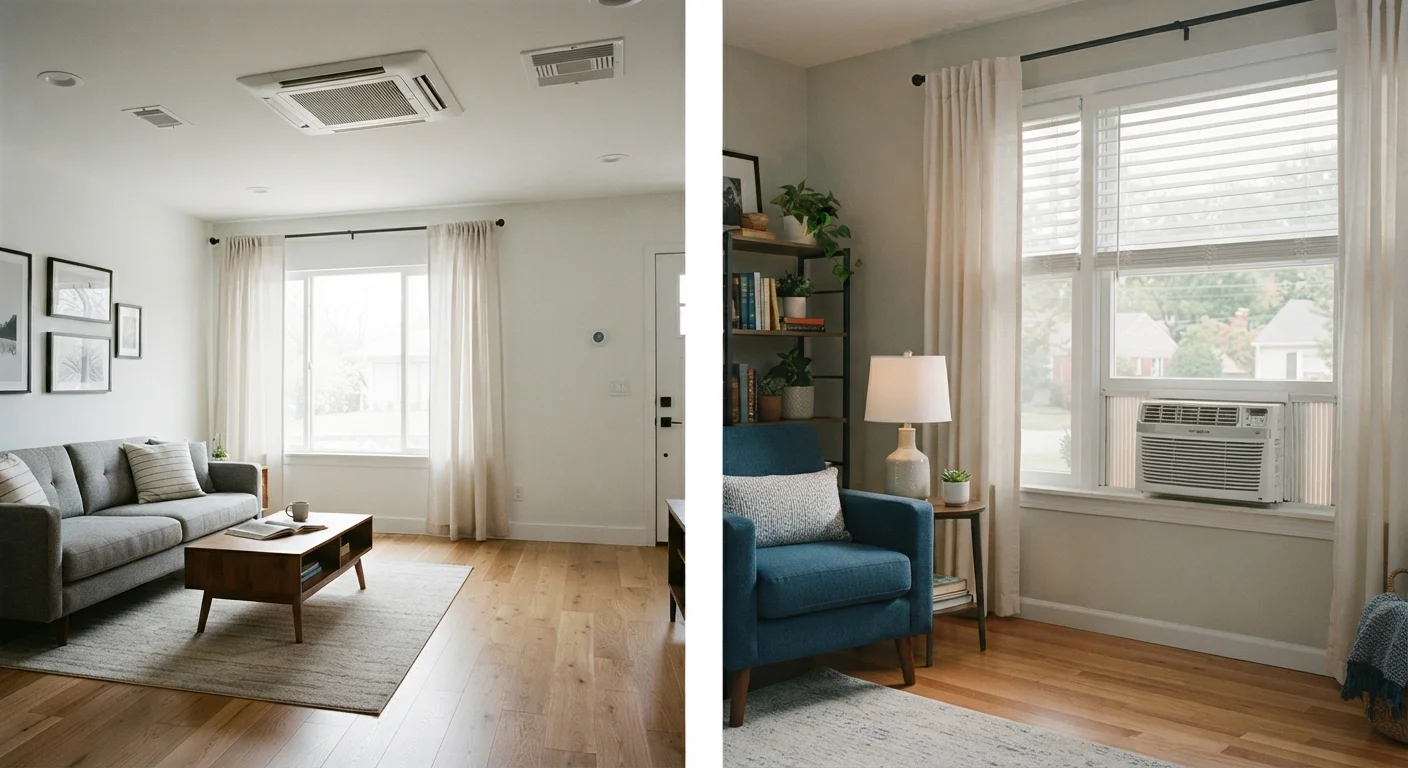
For a broader look at how small device decisions affect your energy use, the comparison of central air versus window units covers one of the most common contributors to summer electricity spikes.