
How each system works
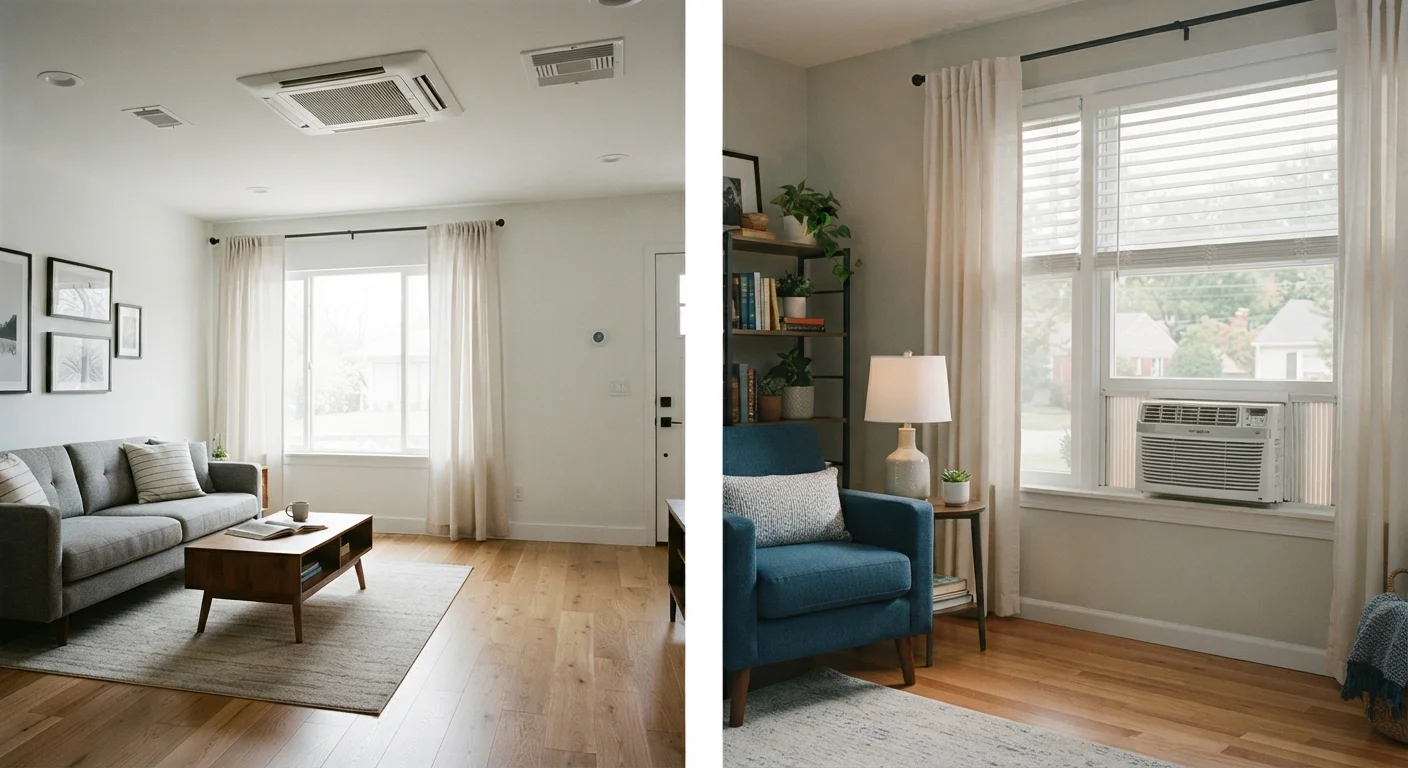
Central air conditioning uses a network of ducts to move cooled air from a central unit through vents in every room. The system has two main components: an indoor air handler and an outdoor compressor. A thermostat controls the whole setup from one point.
Window units work differently. Each one sits in a window frame, pulls warm room air across refrigerant coils, and exhausts heat outside. They cool only the space immediately around them, which means a three-bedroom home would need multiple units to cover each room.
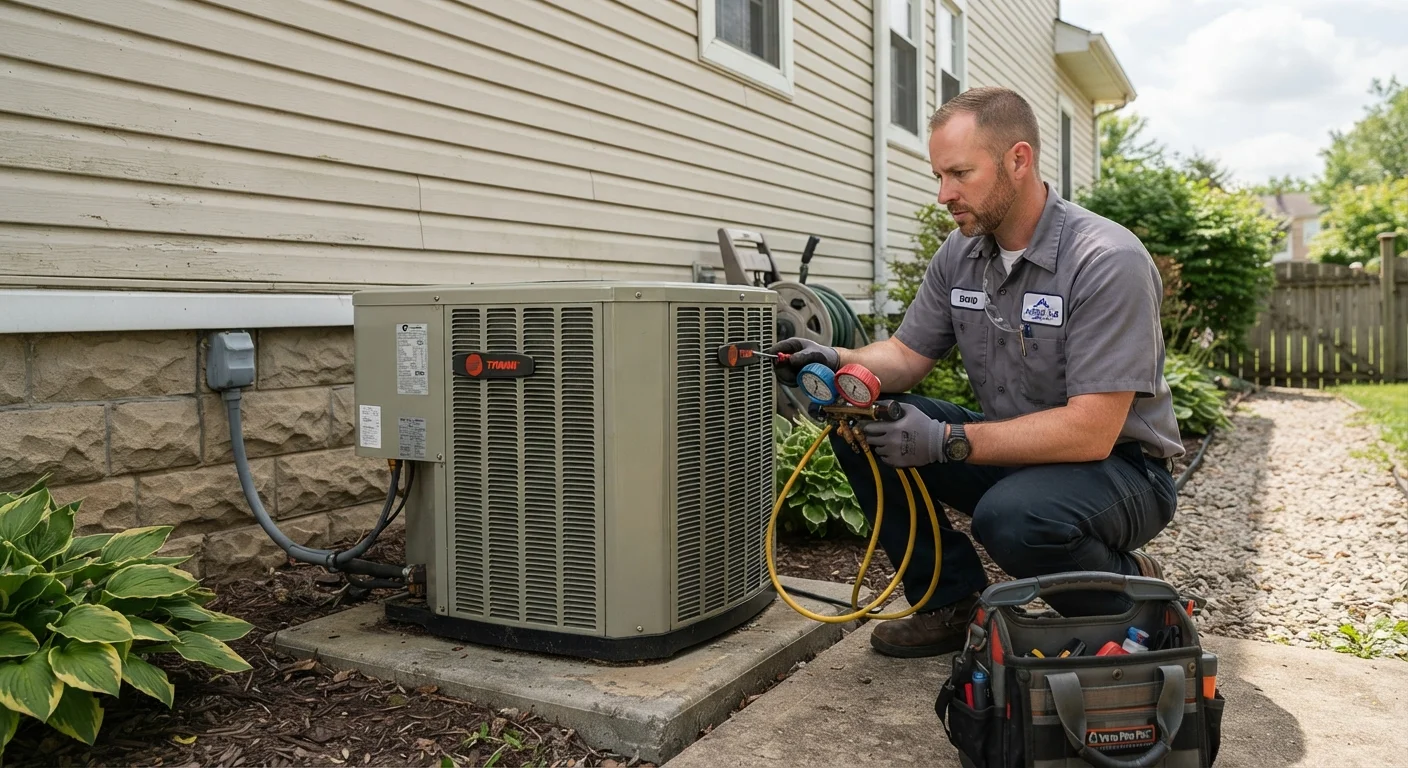
Understanding this difference in how each system distributes air is the starting point for comparing them fairly.
Upfront and installation costs
Central air requires a licensed HVAC professional for installation, and in most jurisdictions a permit is also required. Total costs depend on the size of the home, whether ductwork already exists, and local labor rates. Homes without ducts face a considerably larger investment.
Window units, by contrast, are available at hardware and home goods stores and most homeowners can install one without professional help. The cost per unit is low, though buying several to cover a large home adds up.
| Criterion | Central air | Window units |
|---|---|---|
| Upfront cost | $3,000 to $10,000+ installed | $150 to $700 per unit |
| Installation | Licensed HVAC professional required | DIY-friendly in most cases |
| Coverage area | Whole home | Single room per unit |
| Energy efficiency (whole home) | Generally more efficient at scale | Less efficient for multiple rooms |
| Permit required | Typically yes | Usually no |
| Renter-friendly | No | Yes, in most cases |
| Home resale impact | Positive in most markets | None |
For renters, the decision is straightforward: landlord permission or lease restrictions usually rule out central air entirely.
Energy use and monthly bills
A central system is generally more efficient when cooling multiple rooms simultaneously, because a single unit with properly sized ductwork moves air more effectively than several smaller appliances running at once. The efficiency rating to look for on central systems is SEER (Seasonal Energy Efficiency Ratio); higher numbers indicate less electricity used per unit of cooling.
Window units carry an EER (Energy Efficiency Ratio) rating. A well-matched, properly sized window unit can be efficient for a single room, but running several simultaneously across a home typically costs more on a monthly basis than a central system serving the same space.
Your actual bill depends on local electricity rates, how well your home is insulated, and how often you run either system. Reading your utility bills closely can reveal whether your current setup is costing more than it should.
Ductwork matters for central air
Homes without existing ductwork face substantially higher installation costs if central air is pursued. Adding new ductwork to an older home can add thousands of dollars to the project. A licensed HVAC contractor can assess your home's current setup and provide an accurate estimate.
Comfort, convenience, and control
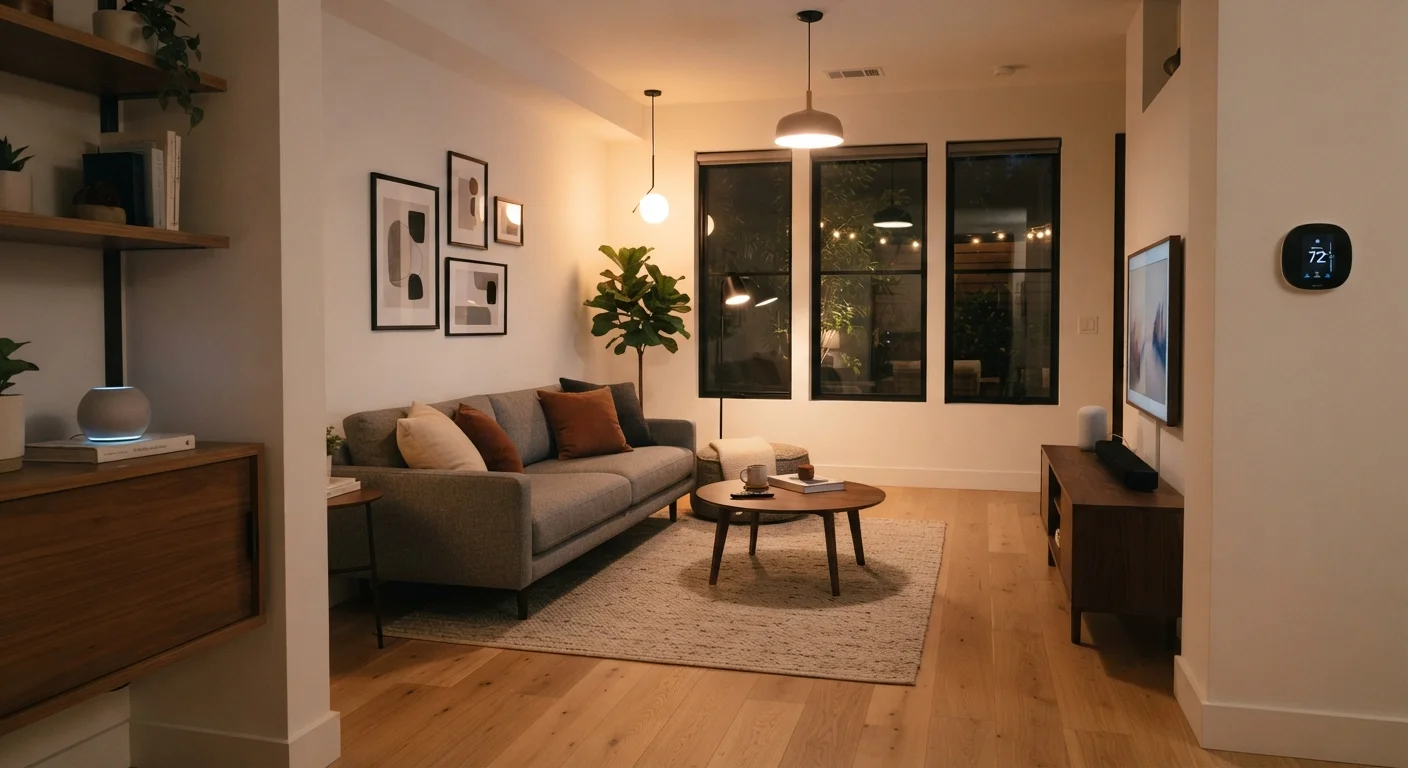
Central air provides uniform temperature across the home. One thermostat handles every room, which makes the system simpler to operate day-to-day. Modern central systems can connect to programmable or smart thermostats, giving more precise scheduling. For a look at which connected home devices genuinely deliver on that promise, see smart home devices worth the investment.
Window units require individual controls for each room. If someone forgets to turn one off, it runs unattended. On the other hand, this also means you can cool only occupied rooms and leave the rest off, which can lower costs in a partially occupied home.
Noise is another practical difference. Window units produce noticeable sound inside the room where they are installed. Central systems are quieter at the point of use, though the outdoor compressor generates its own noise outside.
Long-term considerations
Central air typically adds value to a home in U.S. real estate markets where it is a standard expectation, particularly in warmer regions. Window units add no lasting value to the property.
Maintenance for central air involves annual professional servicing, filter changes, and duct inspections over time. Window units need regular filter cleaning and should be removed and stored during winter months in colder climates to prevent seal damage.
When either system fails, replacement costs differ significantly. A single window unit is straightforward to swap out. A failing central compressor or air handler is a larger repair or replacement expense, though the system's longer lifespan spreads that cost over many years.
This article provides general home information and education. Costs, timelines, and energy savings vary by home, location, and usage. Consult a licensed HVAC contractor for an assessment specific to your home, and verify local permit requirements before beginning any installation work.