


Why downsizing is harder than it looks on paper
Moving to a smaller home makes clear financial sense for many households: lower monthly costs, less maintenance, and fewer rooms to heat and cool. The logic is straightforward. The execution is where things get complicated.
Most people who have gone through a downsizing move say the practical and emotional challenges were larger than they had expected. The mistakes that cause the most stress are not unusual or hard to predict. They are simply easy to overlook when you are focused on the upside of the move.
The six mistakes below come up repeatedly, and each one has a workable solution if you address it before moving day rather than after.
Assuming less space automatically means lower costs.
Why it happens: People focus on the lower mortgage or rent figure and overlook the one-time expenses that come with the transition itself.
Skipping a detailed floor plan comparison before moving day.
Why it happens: People tour a smaller home and feel confident their furniture will work, without actually measuring either the furniture or the new rooms.
Underestimating how much storage the new space has compared to the old one.
Why it happens: Closets, garage space, and basement storage tend to be smaller or absent in a downsized home, but this is easy to overlook during a walkthrough focused on living areas.
Treating the decluttering process as something that can be done quickly.
Why it happens: People underestimate how long it takes to sort decades of accumulated belongings, especially items with sentimental value.
Ignoring HOA or community rules that affect how you use a smaller property.
Why it happens: Buyers and renters focus on the property itself and often read HOA documents only after signing, if at all.
Expecting everyone in the household to adapt to less space at the same pace.
Why it happens: The person driving the decision to downsize is often more emotionally prepared than other household members, which creates friction after the move.
Planning your finances and your space together
A downsizing move is both a financial decision and a spatial one, and the two are connected in ways that are easy to separate accidentally. The expected monthly savings are real, but they arrive after the upfront costs of the move itself, and those costs routinely run higher than people budget for.
The financial side of the transition benefits from the same careful planning you would apply to any major household change. Tracking irregular one-time expenses alongside your regular monthly budget is a habit that pays off here. If you are still building that habit, the guide to building lasting money habits covers practical approaches that hold up over time.
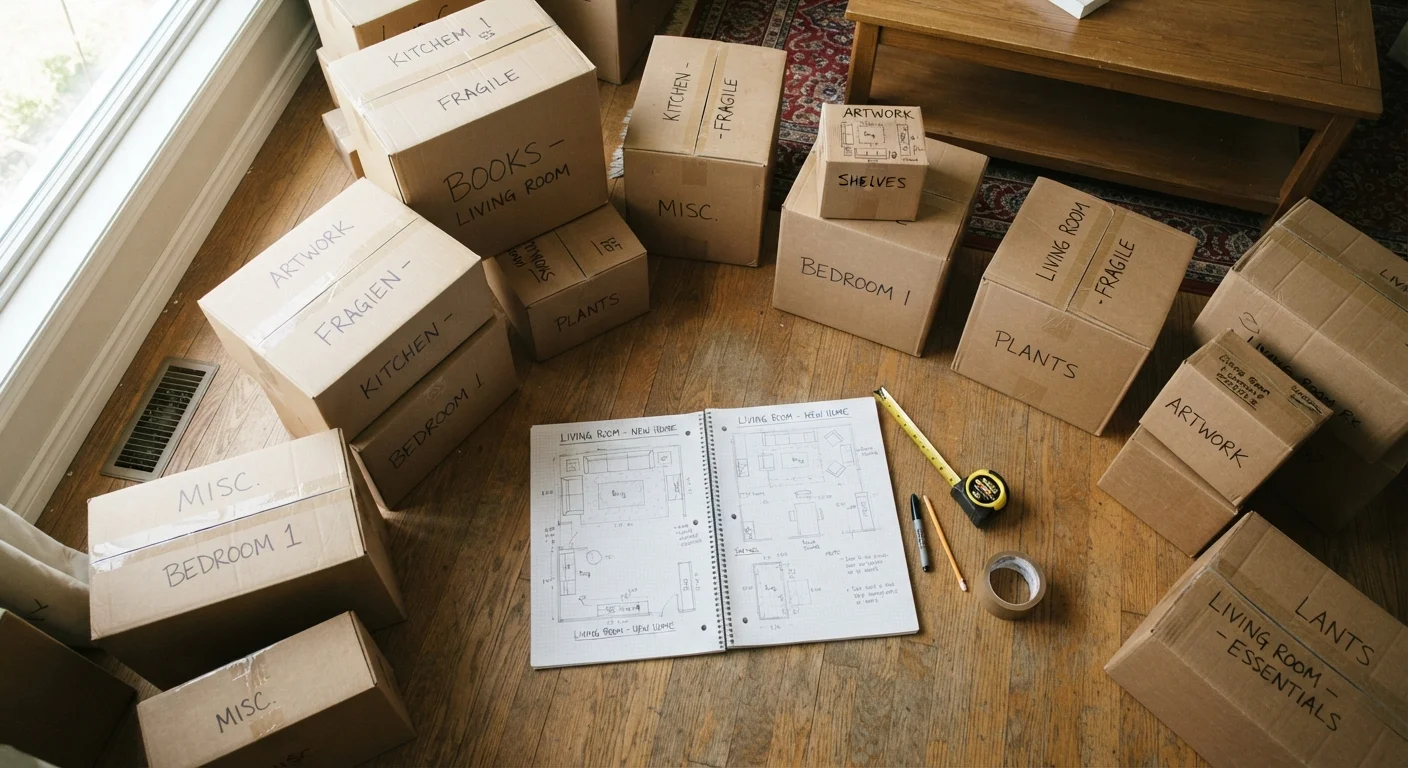
On the spatial side, the floor plan exercise described in the mistakes section above does more than prevent furniture problems. It forces a concrete inventory of what you own and what the new space can actually hold. That inventory is the foundation of a realistic decluttering plan.
Storage unit costs add up quickly
Monthly storage unit fees range widely depending on size and location, but many downsizers end up paying for storage far longer than the few weeks they originally planned. Before renting a unit, set a firm deadline for clearing it out. Indefinite storage often signals that the decluttering decision was deferred rather than made.
If your new home is part of a managed community, factor the HOA structure into your overall picture early. Rules about parking, modifications, and shared amenities affect how usable the space feels day to day. The home maintenance calendar is also worth reviewing before you move in, since smaller homes in older buildings sometimes come with deferred upkeep that becomes your responsibility.
This article is for general informational purposes only and does not constitute financial, legal, or professional advice. Consult a qualified professional regarding decisions specific to your circumstances.