

Where indoor pollutants come from
Most indoor air pollutants have an ordinary source. Cooking on a gas stove releases nitrogen dioxide and fine particles. Candles and incense generate soot. Pressed-wood furniture and some flooring materials release formaldehyde, a VOC, for months or years after installation. Cleaning sprays, air fresheners, and personal care products add more VOCs to the mix. Biological pollutants, including mold spores, dust mite waste, and pet dander, accumulate wherever moisture and organic material are present.
Carbon monoxide deserves separate attention. It comes from gas stoves, furnaces, fireplaces, and attached garages, and it is odorless. A functioning carbon monoxide detector on each floor of a home is a safety requirement, not an optional upgrade. The U.S. Consumer Product Safety Commission recommends this for all homes with gas appliances or attached garages.
Radon testing is worth checking
Radon is a colorless, odorless radioactive gas that can enter homes through foundation cracks. The EPA estimates it is the second leading cause of lung cancer in the United States. Inexpensive short-term test kits are available at hardware stores, and the EPA recommends testing all homes regardless of location.
How poor air quality affects health
Short-term exposure to elevated indoor pollutants can produce headaches, fatigue, eye and throat irritation, and worsening asthma or allergy symptoms. These effects are sometimes grouped under the term "sick building syndrome," which the EPA defines as situations where occupants experience acute discomfort tied to time spent in a specific building without an identifiable illness cause.
Longer-term exposure to specific pollutants carries more serious risks. The EPA links long-term radon exposure to lung cancer. Chronic exposure to VOCs has been associated with liver and nervous system effects in occupational settings, though residential concentrations are generally lower. People with asthma, young children, and older adults are more sensitive to air quality changes than healthy adults.
2x to 5x
How much more polluted indoor air can be vs. outdoor
According to the U.S. Environmental Protection Agency's indoor air quality guidance.
90%
Share of time Americans spend indoors on average
Cited in EPA indoor air quality background materials, based on time-activity studies.
21,000
Estimated annual U.S. lung cancer deaths linked to radon
According to the EPA's radon risk communication materials.
Low-cost steps that reduce pollutant levels
Ventilation is the first and most accessible tool. Opening windows on opposite sides of a room creates cross-ventilation, which moves stale air out and brings fresh air in. This works even in small apartments. In climates where outdoor air quality is reliably good, regular ventilation costs nothing.
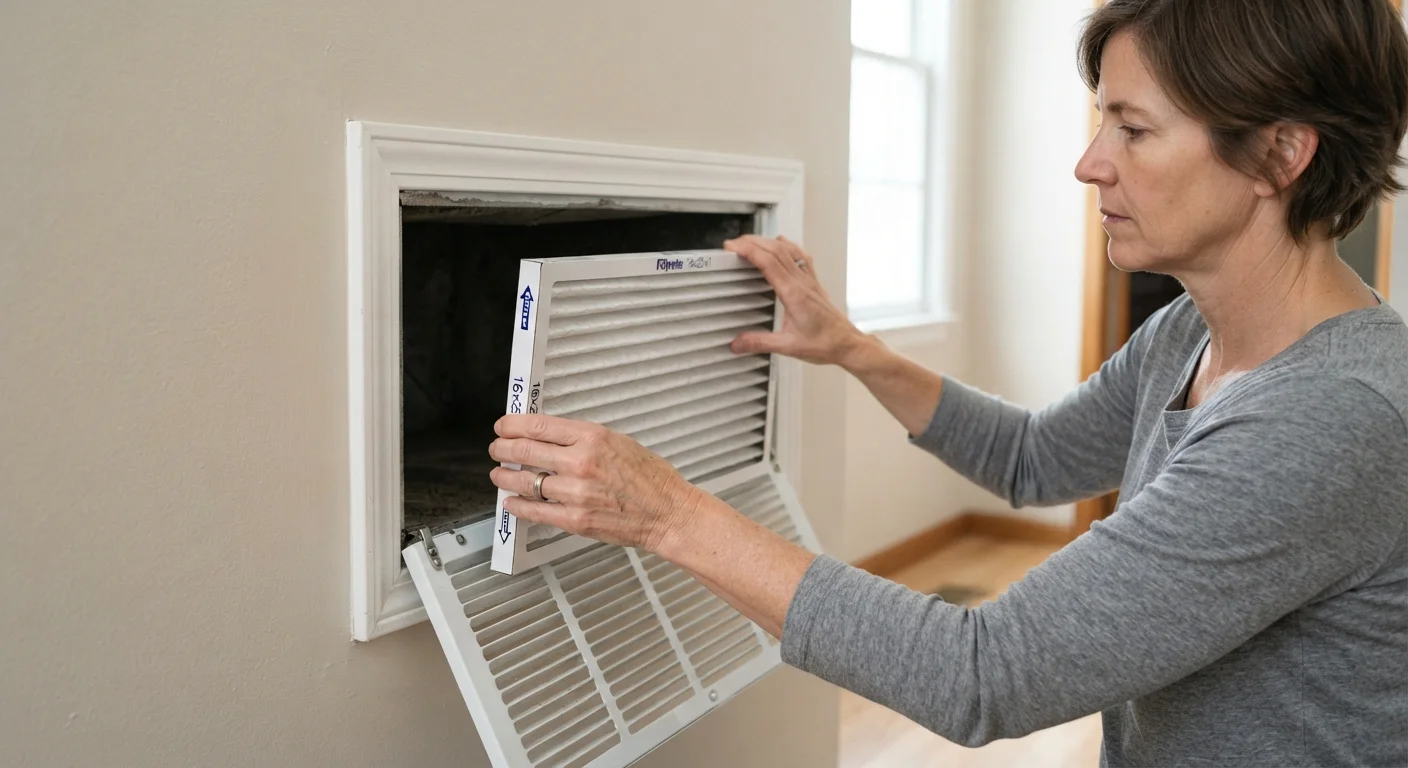
HVAC filter upgrades are a moderate expense with a measurable payoff. Switching from a basic fiberglass filter to one rated MERV 11 or higher captures finer particles, including those from cooking and pet dander. Confirm with the furnace manufacturer that the system can handle the increased resistance before upgrading.
Portable HEPA air purifiers work well in single rooms, particularly bedrooms where people spend extended hours. They do not address gas-phase pollutants like VOCs, but they reduce particle counts, which matters for allergy and asthma management.
Humidity control prevents mold. Keeping indoor relative humidity between 30 and 50 percent, using a dehumidifier in damp basements or bathrooms, and fixing leaks promptly are all effective. Inexpensive digital hygrometers (under $15 at most hardware stores) let you monitor humidity without guessing.
Use the kitchen exhaust fan consistently
Cooking generates fine particles, nitrogen dioxide from gas burners, and moisture. Running the range hood or exhaust fan during and after cooking, and for a few minutes after you finish, can reduce particle concentrations measurably. If your fan vents indoors, open a nearby window to compensate.
Source reduction is often overlooked. Choosing fragrance-free or low-VOC cleaning products, avoiding synthetic air fresheners, and letting newly purchased furniture or flooring off-gas in a garage before bringing it inside all lower the pollutant load before it enters living spaces.
When to consider professional testing
Consumer-grade air quality monitors measure particles and some VOCs, but their accuracy varies. If household members experience persistent symptoms that correlate with time spent at home, or if visible mold covers an area larger than about 10 square feet, professional assessment is worth pursuing. A certified industrial hygienist can identify specific pollutants and their sources with laboratory-grade equipment.
Radon testing is a practical starting point for most homeowners, since short-term kits cost around $15 to $30 and provide a clear result. The EPA recommends that any home with a radon level at or above 4 picocuries per liter (pCi/L) be mitigated by a qualified radon contractor. Mitigation systems typically involve sub-slab depressurization and range in cost depending on home type and foundation.
This article is for general informational purposes only. It is not a substitute for professional health, safety, or environmental advice. Consult a licensed professional for assessments specific to your home or health situation.