

Why 'green' labels are not all equal
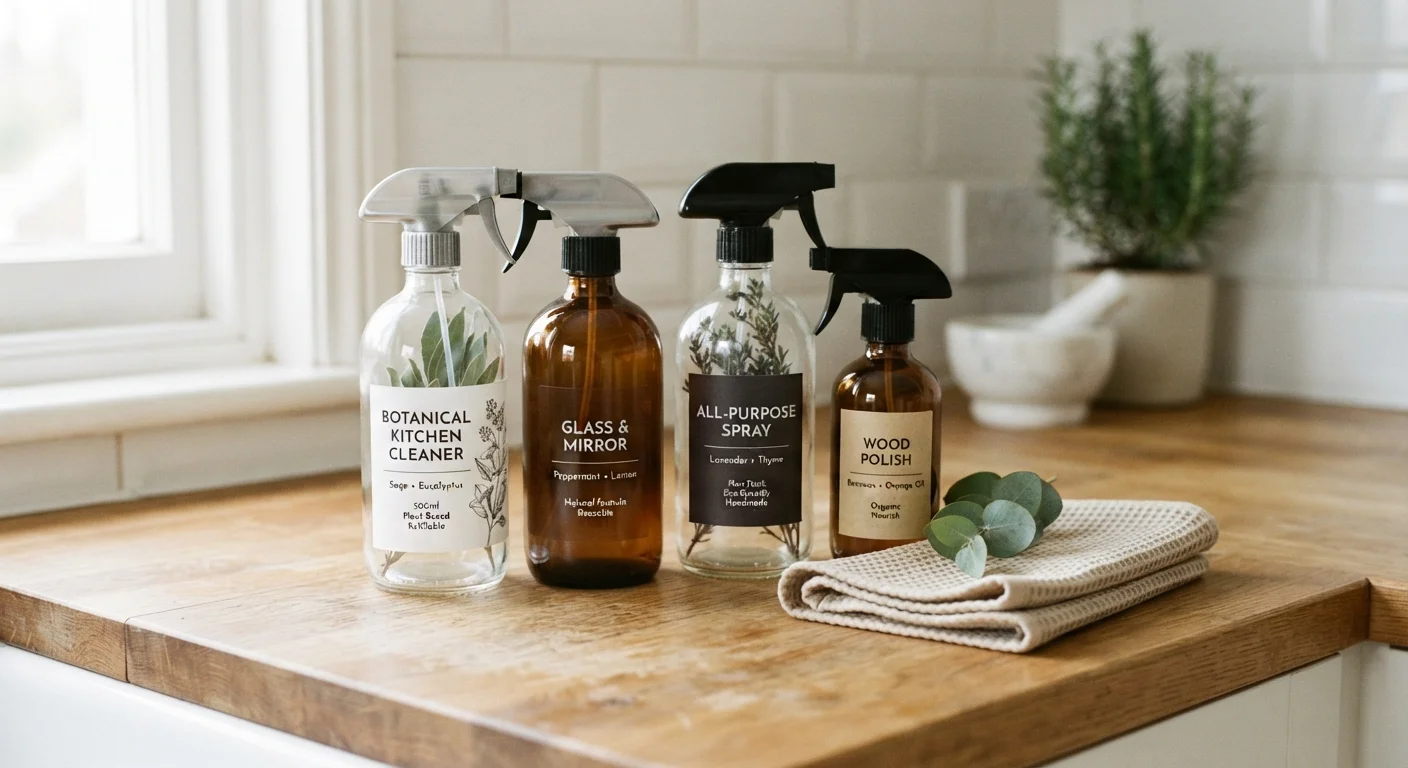
Walk down any cleaning aisle and the front labels read like an environmental checklist: 'plant-powered,' 'biodegradable,' 'non-toxic,' 'earth-friendly.' The volume of these claims has grown faster than the standards behind them. For shoppers trying to make thoughtful choices, the gap between marketing language and regulated meaning is worth understanding before assuming any bottle meets a particular bar.
Two broad categories exist: products that carry independent certification from a program with published criteria, and products that use general environmental language with no external verification. The first group has gone through a defined review process. The second group has not, though that does not automatically make those products harmful; it just means the claims rest on the manufacturer's own determination.
For households thinking about product choices alongside other home decisions, understanding what your utility bills reveal can be another useful lens on everyday resource use.
Myth
If a product says 'natural' or 'eco-friendly,' it has been vetted by a regulator.
Fact
The U.S. Federal Trade Commission's Green Guides discourage vague environmental claims, but the terms 'natural' and 'eco-friendly' on household cleaners have no mandatory federal definition or pre-market approval requirement.
Any manufacturer can print 'natural' on a bottle without meeting a defined standard. The FTC's Green Guides (last updated in 2012 and under periodic review) set expectations for truthfulness in environmental marketing, but they do not require pre-approval or third-party testing before a product reaches store shelves.
What does carry independent weight is a program like the EPA's Safer Choice label, which requires products to meet specific ingredient safety criteria before certification. Checking for a recognized third-party mark is more reliable than reading front-of-label language alone.
Myth
Plant-based ingredients are always safe for skin and surfaces.
Fact
Many plant-derived compounds, including certain essential oils, citrus solvents, and enzyme blends, can cause skin irritation, allergic reactions, or damage to some surfaces.
The word 'plant-based' describes an ingredient's origin, not its safety profile. Limonene, a compound derived from citrus peel and used widely in 'green' cleaners, is a known skin sensitizer and can trigger reactions in people with fragrance sensitivities. Enzymes effective at breaking down grease can also irritate mucous membranes if products are inhaled or splashed near the eyes.
Ventilating the area while cleaning, wearing gloves when using any concentrated cleaner, and checking a product's safety data sheet (SDS) are practical steps regardless of whether the label emphasizes natural origins.
Myth
Fragrance-free and unscented mean the same thing.
Fact
'Fragrance-free' means no fragrance ingredients were added; 'unscented' can mean masking agents were used to cover the smell of other chemicals.
This distinction matters for people with asthma, fragrance allergies, or chemical sensitivities. A product marked 'unscented' may still contain fragrance compounds whose purpose is to neutralize odor rather than add a pleasant scent. People who react to fragrances should look specifically for 'fragrance-free' labeling or review the full ingredient list.
The American Academy of Dermatology notes that fragrances are among the most common causes of contact dermatitis, so this label distinction has practical health relevance beyond marketing preference.
Myth
Concentrated or refillable cleaners are automatically better for the environment.
Fact
Concentrated formulas do reduce packaging and transport-related emissions, but the full environmental picture depends on how the product is made, what it contains, and how it is disposed of.
Buying a concentrated cleaner and diluting it at home does cut plastic use per cleaning session, and transporting lighter, smaller bottles produces fewer emissions per unit. Those are real benefits. However, if the active ingredients are persistent in waterways or harmful to aquatic organisms, the packaging reduction does not cancel out downstream impact.
Independent lifecycle assessments, where they exist for a product, give a more complete view than packaging claims alone. For household purposes, combining lower packaging volume with verified safer ingredients is a more complete approach than either factor alone.
Myth
Homemade vinegar-and-baking-soda cleaners work as well as commercial products for disinfecting.
Fact
Vinegar and baking soda are effective for some cleaning tasks but are not EPA-registered disinfectants and do not reliably kill pathogens at the concentrations used in household recipes.
Vinegar (acetic acid at typical 5% household strength) can reduce certain bacteria on surfaces, but it is not an EPA-registered disinfectant. The EPA maintains a list of disinfectants tested and approved for specific pathogens; household vinegar is not on it. When baking soda and vinegar are mixed, they neutralize each other, producing water and carbon dioxide: the resulting solution has less cleaning power than either ingredient used separately.
For general wiping and deodorizing, these ingredients have genuine utility. For areas where pathogen reduction matters, such as surfaces used for raw meat preparation or bathrooms in households with immunocompromised members, products that carry EPA registration for disinfection are appropriate.
Reading labels more accurately
Once the myth-fact framing is clear, a few practical habits help when evaluating a specific product.
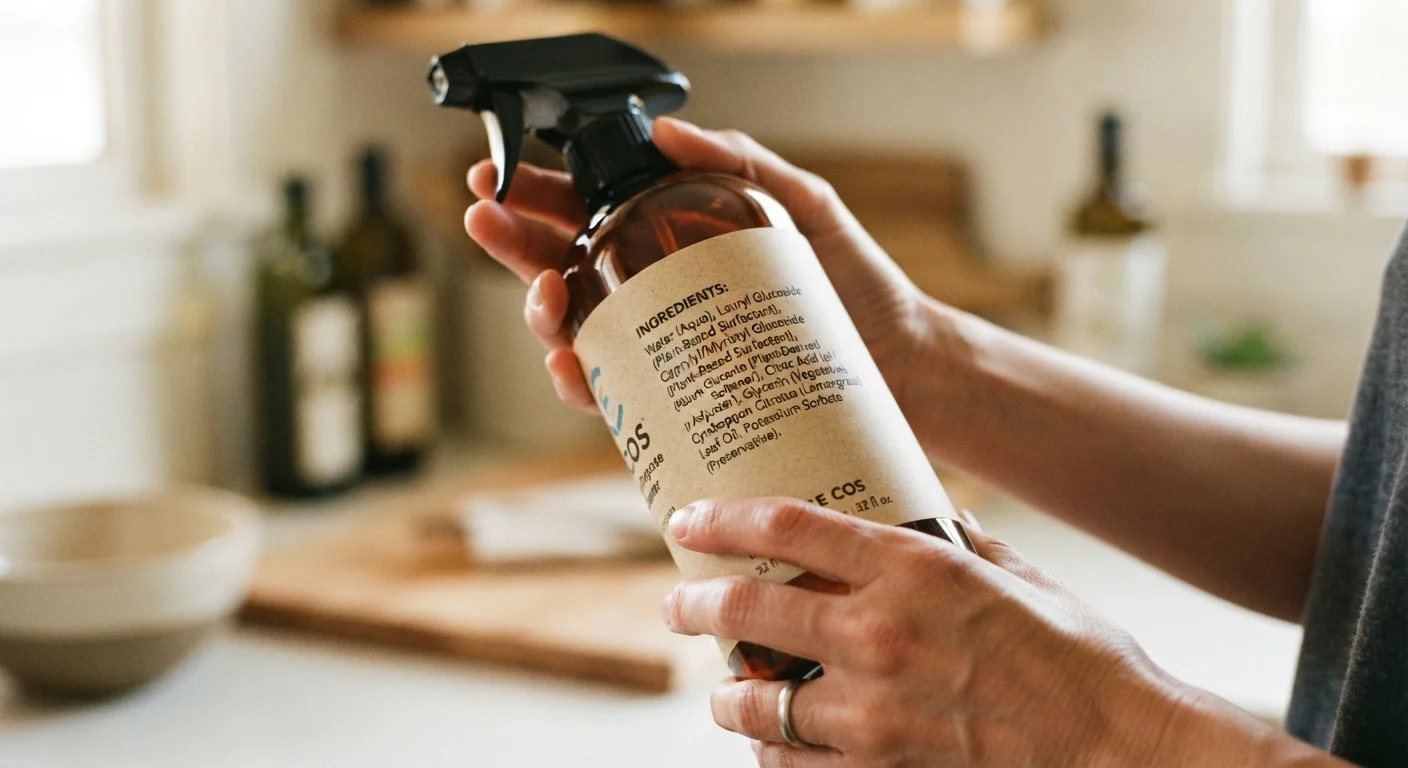
Start with the back of the bottle. Full ingredient disclosure is not required by federal law for cleaning products the way it is for food or cosmetics, but many manufacturers that make genuine transparency a priority list ingredients voluntarily. The EPA's Safer Choice program requires participants to disclose all ingredients, including fragrance components, on its database.
Look for the specific certification mark rather than descriptive language. Safer Choice, USDA Certified Biobased (which addresses ingredient origin, not toxicity), and NSF certifications each measure different things. Knowing what a particular mark verifies prevents conflating them.
For people managing fragrance sensitivities or skin conditions, the fragrance-free versus unscented distinction covered above has direct relevance. The same careful reading applies to fabric care: how you wash and care for clothing affects both garment life and how much cleaning product you use over time.
This article is for general informational purposes only. For health concerns related to chemical exposures or sensitivities, consult a qualified medical professional. For specific regulatory questions, refer directly to the EPA or FTC guidance documents.