
How compound interest actually works
Start with a basic example. You deposit $1,000 into an account earning 5% interest per year. After year one, you have $1,050. In year two, the 5% is applied to $1,050, not the original $1,000, so you earn $52.50 instead of $50. The extra $2.50 may not seem like much, but the gap widens every year because each new interest calculation starts from a higher base.
That mechanism is the whole idea: interest earning interest. With simple interest, you would earn exactly $50 every year, regardless of what had accumulated. With compound interest, the annual gain keeps rising.
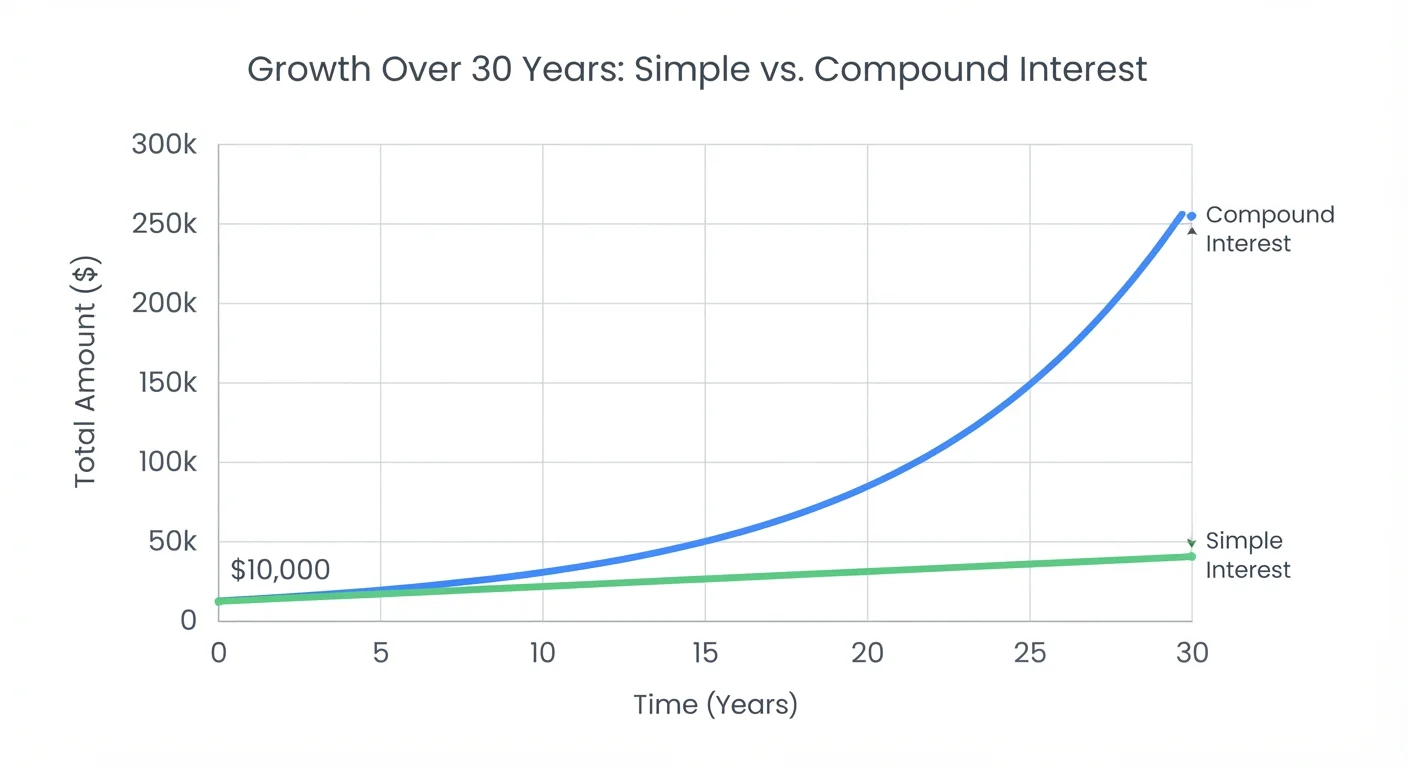
The math behind it uses a standard formula: final amount equals principal times (1 plus the interest rate) raised to the power of the number of compounding periods. You do not need to memorize that formula, but it explains why time has such an outsized effect. Raising a number above 1 to a higher and higher power produces results that accelerate, not grow at a steady pace.
The two sides: saving versus borrowing
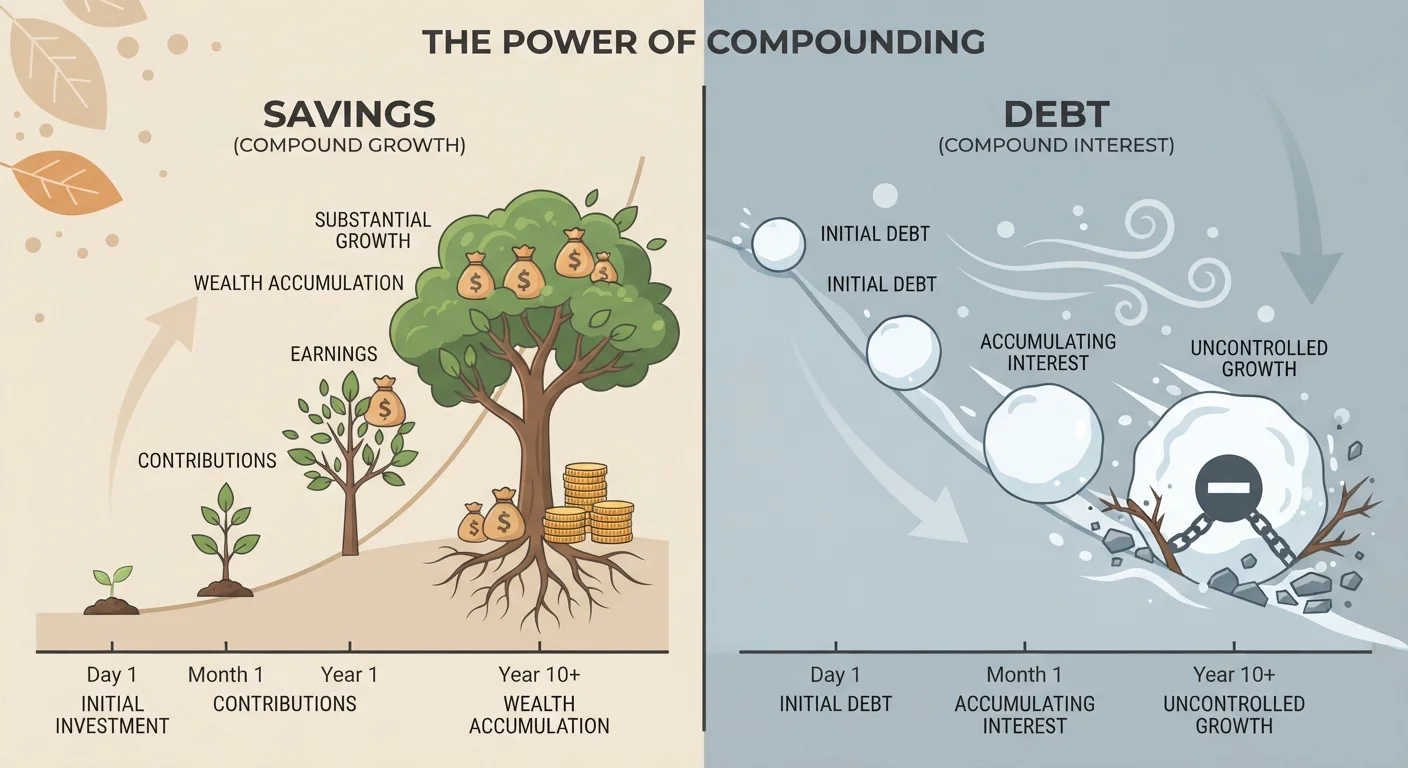
Compound interest does not favor one side automatically. It simply amplifies whatever is happening in an account, growth or debt accumulation.
On the saving side, compound interest means your balance can grow beyond what you directly contributed. A retirement account that earns consistent returns over decades may end up with more money coming from compounded growth than from the actual contributions. That is why getting the financial basics in place before investing matters: once a solid foundation exists, compound growth has time and principal to work with.
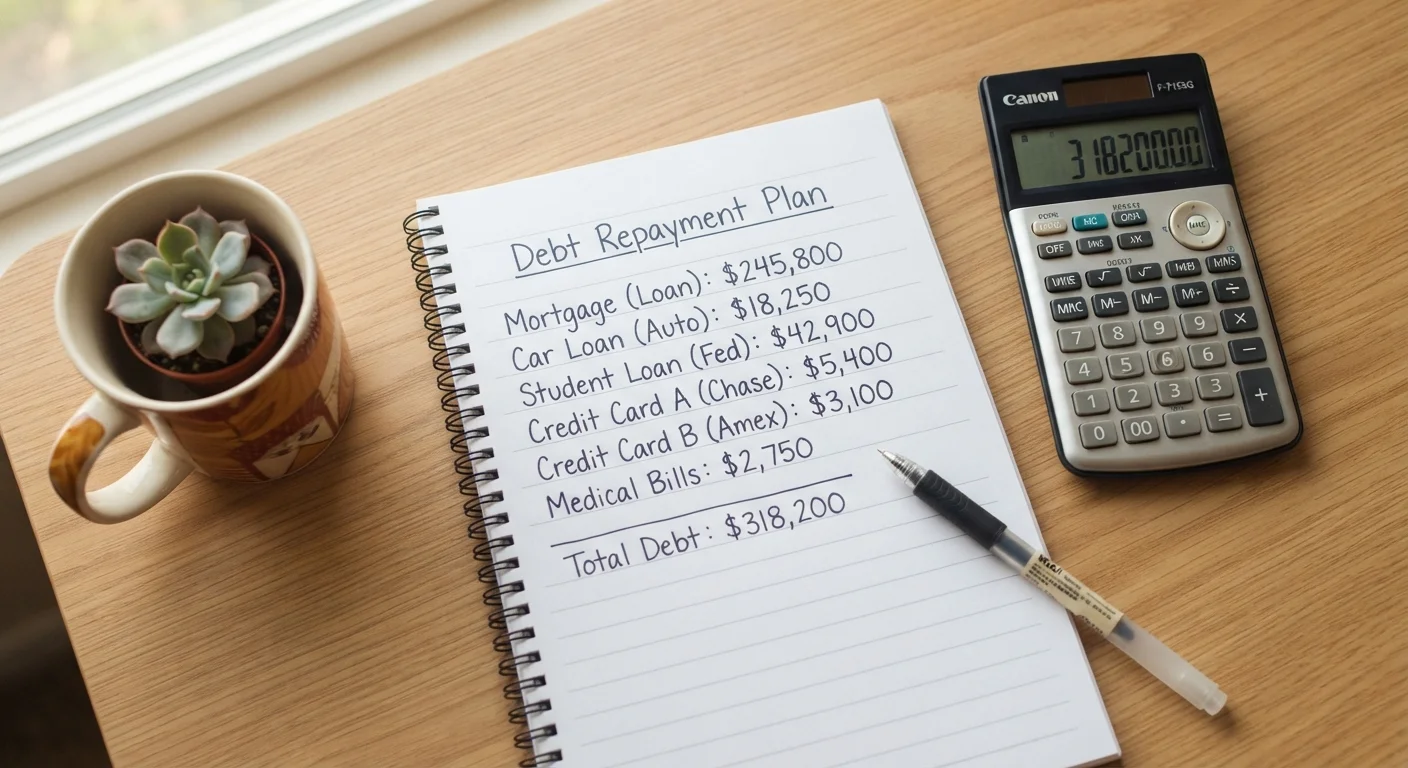
On the borrowing side, the same force works in the opposite direction. Credit card balances that carry over each month accrue interest on the existing balance, and then on the interest added, and so on. Someone carrying a $3,000 balance at 20% annual interest who makes only minimum payments can end up paying back considerably more than the original amount, and it can take years to clear. The avalanche and snowball debt-payoff methods are two structured approaches people use to work against this effect.
20%+
Average credit card APR in the U.S.
According to Federal Reserve consumer credit data, average credit card interest rates have exceeded 20% in recent years, making compound interest on carried balances costly.
~$1,629
$1,000 compounded annually at 5% over 10 years
Using the standard compound interest formula, $1,000 at 5% annual interest compounds to approximately $1,629 after 10 years, compared to $1,500 under simple interest.
Daily
How often many credit cards compound interest
Most major U.S. credit card issuers compound interest daily, meaning the effective annual rate exceeds the advertised APR for balances that carry over each month.
Why time matters more than amount
A common pattern in personal finance research is that starting earlier tends to outweigh contributing more later. Consider two savers: one puts away $200 per month starting at age 25, the other puts away $400 per month starting at age 40. Assuming the same rate of return, the earlier saver often finishes with a larger balance despite contributing less total money. The extra 15 years of compounding is the reason.
This does not mean it is too late to benefit from compound interest if you start later. It means the math consistently rewards consistency and time. Building steady money habits tends to produce better outcomes than waiting for a large lump sum to invest.
One common misconception is that you need a large amount to get started. Compound interest applies to small balances too. The amounts are smaller, but the mechanism is identical. Several widespread money myths discourage people from saving early, and the belief that small contributions do not matter is among them.
What to watch for on debt products
When evaluating any debt product, the compounding frequency affects the true cost. A credit card may advertise an annual percentage rate (APR), but interest often compounds daily, which means the effective annual rate is slightly higher than the stated APR. Lenders are required to disclose the APR under federal Truth in Lending Act rules, but it is worth asking specifically how and when interest is compounded.
Mortgages and auto loans typically use simple interest or amortized structures, which behave differently from revolving credit. On an amortized loan, your payment is split between interest and principal each month, with the interest portion shrinking as the balance falls. That is more predictable than revolving debt, but the total interest paid over the life of a long loan can still be substantial.
Paying more than the minimum on any debt, when your budget allows, reduces the principal faster and cuts into the base that future interest calculations use. A qualified financial adviser can help you weigh the trade-offs for your specific situation.
This article is for general informational purposes only and does not constitute financial, investment, tax, or legal advice. Consult a licensed financial professional before making decisions based on your personal circumstances.