

How each method works
Both strategies share a foundation: you pay the minimum on every debt each month, then direct any extra money toward one specific debt until it is gone. You then roll that freed-up payment into the next target. The difference is how you rank the order.
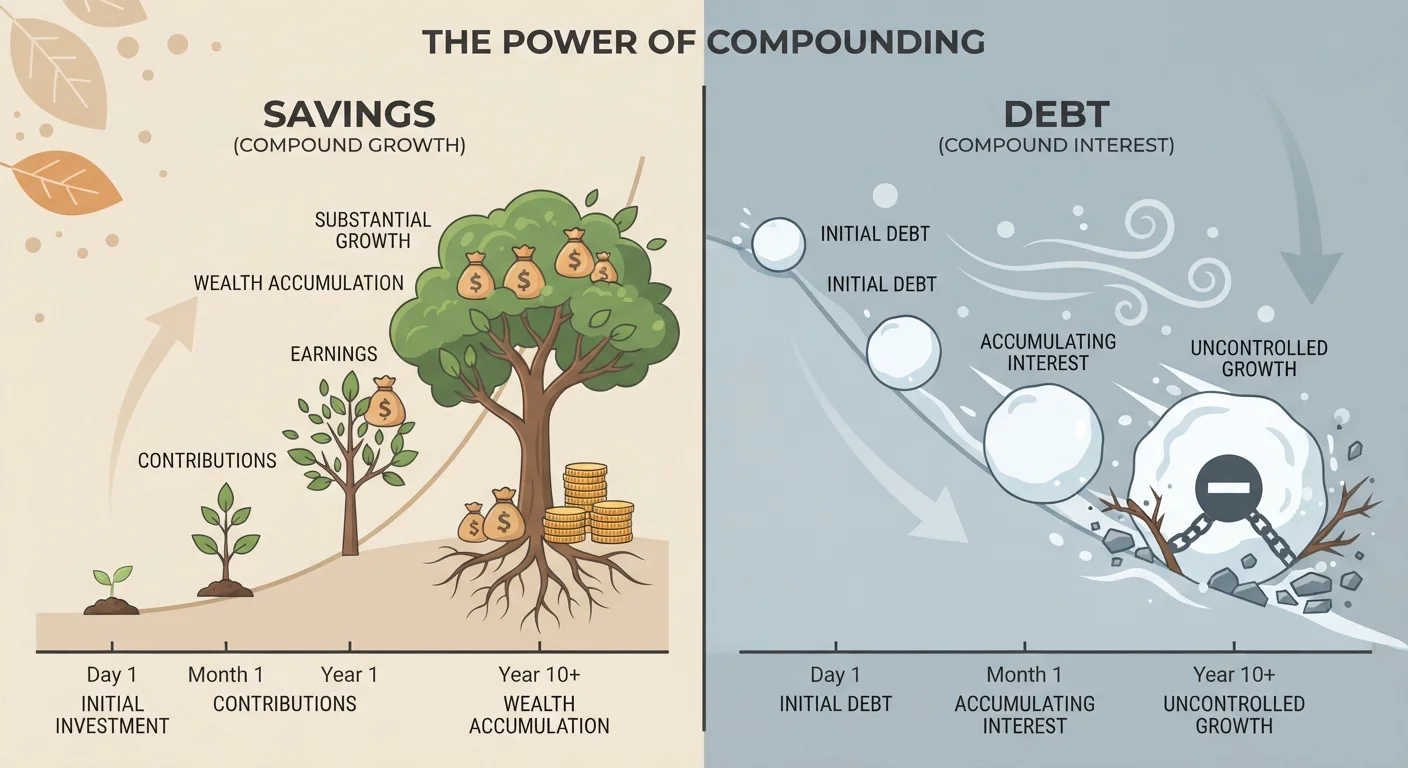
With the avalanche method, you rank debts by interest rate and attack the highest-rate balance first. Because interest compounds on unpaid balances, removing the highest-rate debt early limits how much extra you pay over time. Understanding how compound interest works helps clarify why rate order matters: a 24% APR balance grows much faster than a 6% one, so every month you carry it costs more.
With the snowball method, you rank debts by balance size and pay off the smallest first, regardless of its interest rate. Once that account reaches zero, you move to the next smallest. The appeal is psychological: clearing an entire account gives you a concrete result early in the process.

The cost difference in practice
These are general illustrations, not projections
The numbers used in examples throughout this article are hypothetical. Actual interest costs depend on your specific balances, rates, minimum payments, and extra payment amounts. Use a debt payoff calculator with your real figures to estimate your own savings.
Suppose you have three debts: a $500 medical bill at 0% interest, a $3,000 credit card at 22% APR, and an $8,000 personal loan at 11% APR. The avalanche method would have you pay the credit card first, then the personal loan, then the medical bill. The snowball method would reverse that order, starting with the $500 bill.
In a case like this, the avalanche order saves money because the 22% balance accumulates interest every month it stays open. The snowball order costs more in total interest but wipes out the first account in a matter of weeks, which some people find motivating enough to keep going.
The gap between the two methods varies by how many accounts you have, what rates apply, and how much extra you can put toward debt each month. For some people, the difference is modest. For others, especially those carrying high credit card balances, it can amount to hundreds of dollars over the life of repayment.
Motivation and consistency
Neither method works if you stop. That is the practical argument for the snowball approach: behavioral research has found that people respond strongly to completing tasks, and eliminating a full account, even a small one, can reinforce the habit of paying extra each month.
The avalanche method asks you to stay focused on a larger balance that may take months or years to clear before you see your first zero. Some people handle that without difficulty. Others find the wait discouraging and reduce or abandon their extra payments.
Choosing based on your own history with financial commitments is reasonable. If you have started debt payoff plans before and stalled, the snowball method may produce better real-world results for you even if it costs more on paper. If you have a stable budget and track progress by numbers rather than milestones, the avalanche method may be a better fit.
Side-by-side comparison
The table below contrasts the two methods across the factors most relevant to a typical borrower.
| Criterion | Avalanche method | Snowball method |
|---|---|---|
| Payoff order | Highest interest rate first | Smallest balance first |
| Total interest paid | Lower over the repayment period | Higher if rates differ widely |
| Time to first zero balance | Potentially longer | Faster for small accounts |
| Motivational structure | Number-driven progress | Account-elimination milestones |
| Best suited to | Consistent planners focused on cost | Those who need early wins to stay on track |
This article is for general informational purposes only and does not constitute personalized financial, tax, or legal advice. Your situation depends on factors specific to you. Consider speaking with a licensed financial counselor or advisor before making decisions about debt repayment.