
What a credit score actually represents
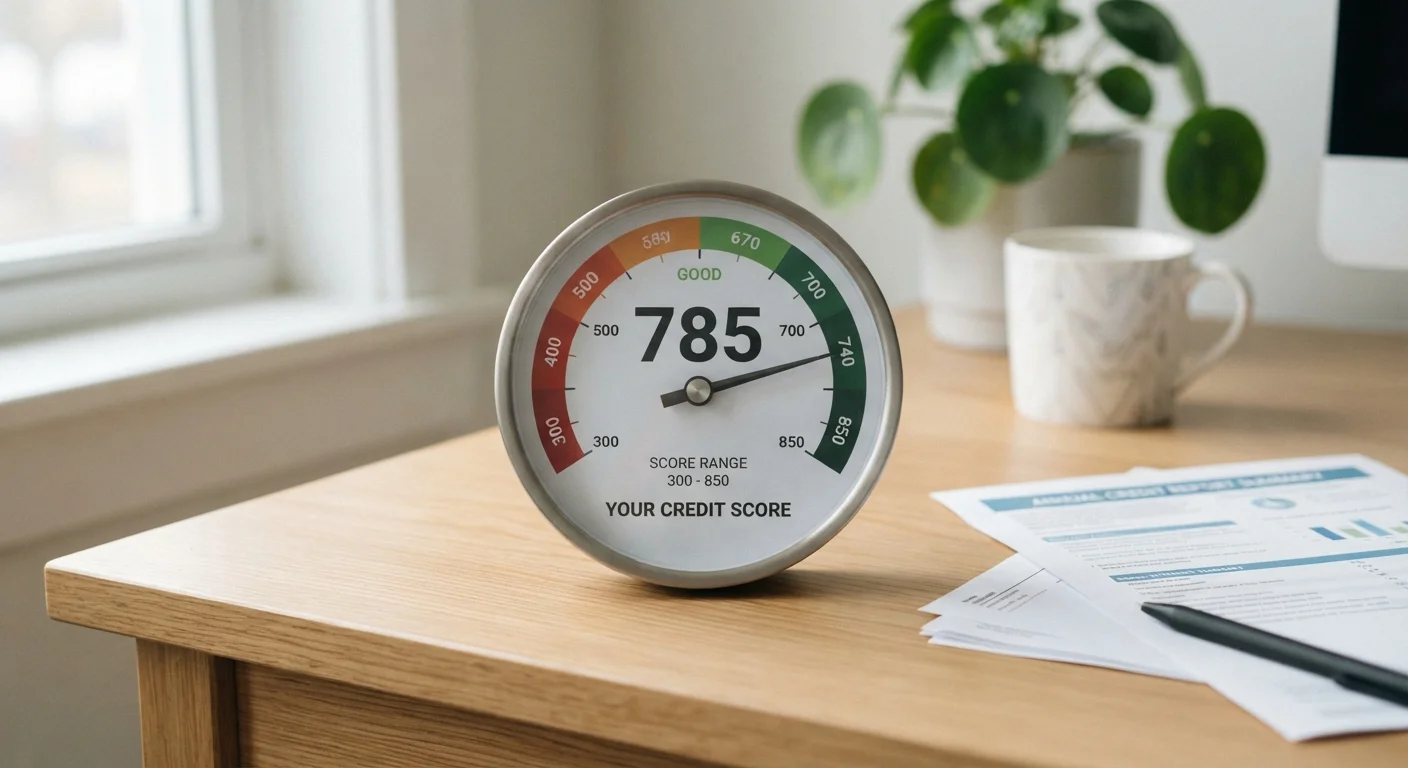
A credit score is a statistical summary of your credit history compressed into a single number. It does not measure your income, your savings, or your overall financial health. What it measures is the pattern of how you have borrowed and repaid money over time.
The number exists because lenders need a fast, standardized way to assess risk. Without it, every credit decision would require a manual review of your full financial history. The score does that compression work automatically, drawing on data that creditors report to the three major bureaus.
Scores generally fall into labeled bands. A score below 580 is considered poor under the FICO model. Scores from 580 to 669 are fair. From 670 to 739 is good, 740 to 799 is very good, and 800 and above is exceptional. These bands are not universal; different lenders apply their own thresholds when making approval decisions.
The five factors that shape your score
FICO, the model used in the majority of U.S. lending decisions, breaks a score down into five weighted categories.
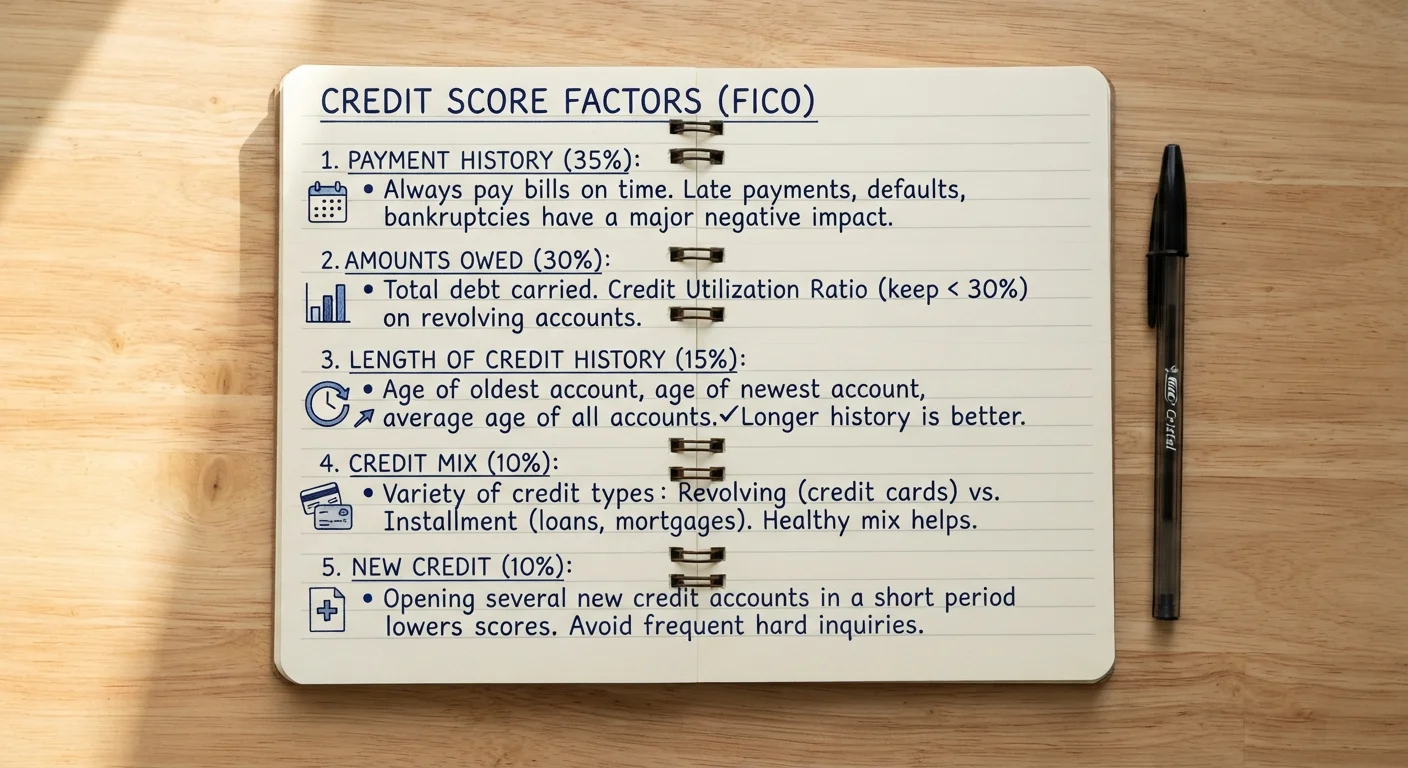
- Payment history (35%): Whether you have paid bills on time. A single missed payment can lower your score, and the effect grows if the account goes to collections.
- Amounts owed (30%): How much of your available credit you are currently using. This is called your credit utilization ratio. Using a large share of your available credit limit tends to lower your score, even if you pay on time.
- Length of credit history (15%): How long your accounts have been open. Older accounts and a longer average account age generally help.
- Credit mix (10%): Whether you have different types of credit, such as a credit card, an auto loan, or a mortgage. A variety can help, but you do not need every type.
- New credit (10%): How recently you have applied for credit. Each hard inquiry can lower your score slightly for up to 12 months, though the effect is usually small.
Credit score vs. credit report
Your credit report and your credit score are related but different. The report is the full record of your accounts, payment history, and public records. The score is a number derived from that report. Errors on the report can affect the score, which is why reviewing the underlying report matters as much as watching the number itself.
This article is for general informational purposes only and is not financial advice. For guidance on your specific situation, consult a licensed financial advisor or credit counselor.
How lenders use the number
When you apply for a credit card, auto loan, mortgage, or even some rental housing, the lender typically pulls your credit score as part of the review. The score helps them decide two things: whether to approve the application at all, and what interest rate or terms to attach to it.
A higher score generally gives lenders more confidence that you will repay the debt. That confidence can translate into a lower interest rate, which means you pay less over the life of a loan. The difference in total cost between a low and a high score can be substantial on a long-term loan like a mortgage.
Some lenders also use credit scores in ways that go beyond loan approvals. Landlords may check scores before approving a rental. Insurers in some states use credit-based insurance scores, which are related but not identical to lending scores, when pricing auto or homeowners policies.
300-850
FICO Score range
The Fair Isaac Corporation (FICO) defines this as the standard range for its widely used consumer credit scoring model.
35%
Weight of payment history in FICO Score
According to FICO, payment history is the single largest factor in its scoring formula.
26 million
Americans estimated to be credit invisible
The Consumer Financial Protection Bureau (CFPB) has estimated this figure for adults with no scoreable credit history.
Why your score may differ across sources
If you have ever checked your score in two places and seen two different numbers, that is normal. There are multiple scoring models, and each bureau may hold slightly different data. A lender who pulls your Experian report will see a score calculated from Experian's data using their chosen model. A different lender using TransUnion and a different model version may see a different number.
The practical takeaway is that monitoring your score regularly from any reliable source gives you a useful directional read on where you stand. Errors on your credit report can drag your score down unjustly, so the Consumer Financial Protection Bureau (CFPB) recommends reviewing your credit reports periodically and disputing inaccuracies with the relevant bureau. You can request free copies of your reports from AnnualCreditReport.com, the site authorized under federal law for this purpose.