

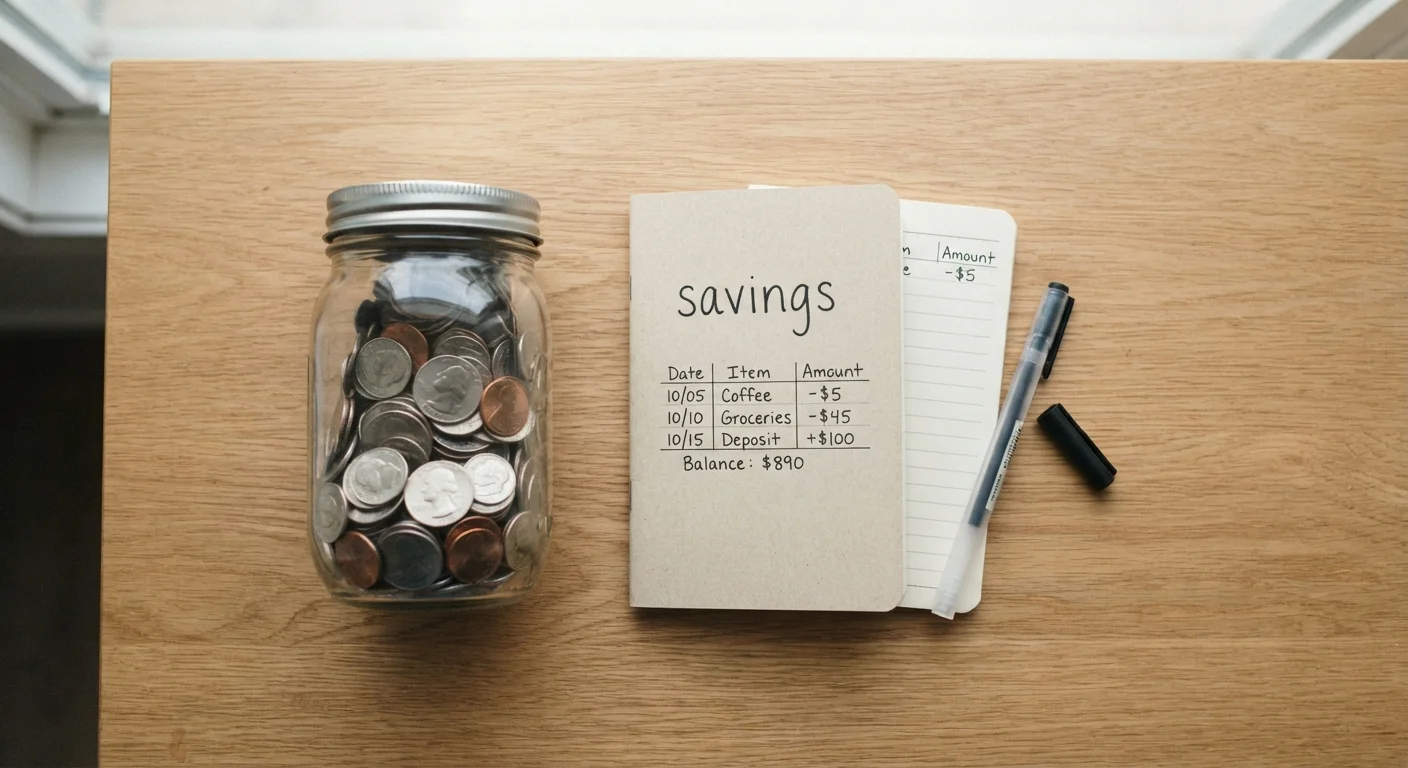
How each one works
An emergency fund is a category of money, not a specific account type. It is cash you set aside exclusively for unplanned, urgent costs: a car breakdown, a medical bill, or a gap in income after a job loss. The defining feature is its purpose. You do not touch it for planned expenses or discretionary spending.
A savings account is a deposit account offered by a bank or credit union that holds money separately from your checking account and typically earns interest. It is a container. What you put inside it, and why, is up to you.
These two things overlap in a practical way: many people store their emergency fund inside a savings account because savings accounts are liquid (meaning you can withdraw money when you need it), federally insured up to $250,000 per depositor at FDIC-member banks, and less tempting to dip into than a checking account.
Why the distinction matters
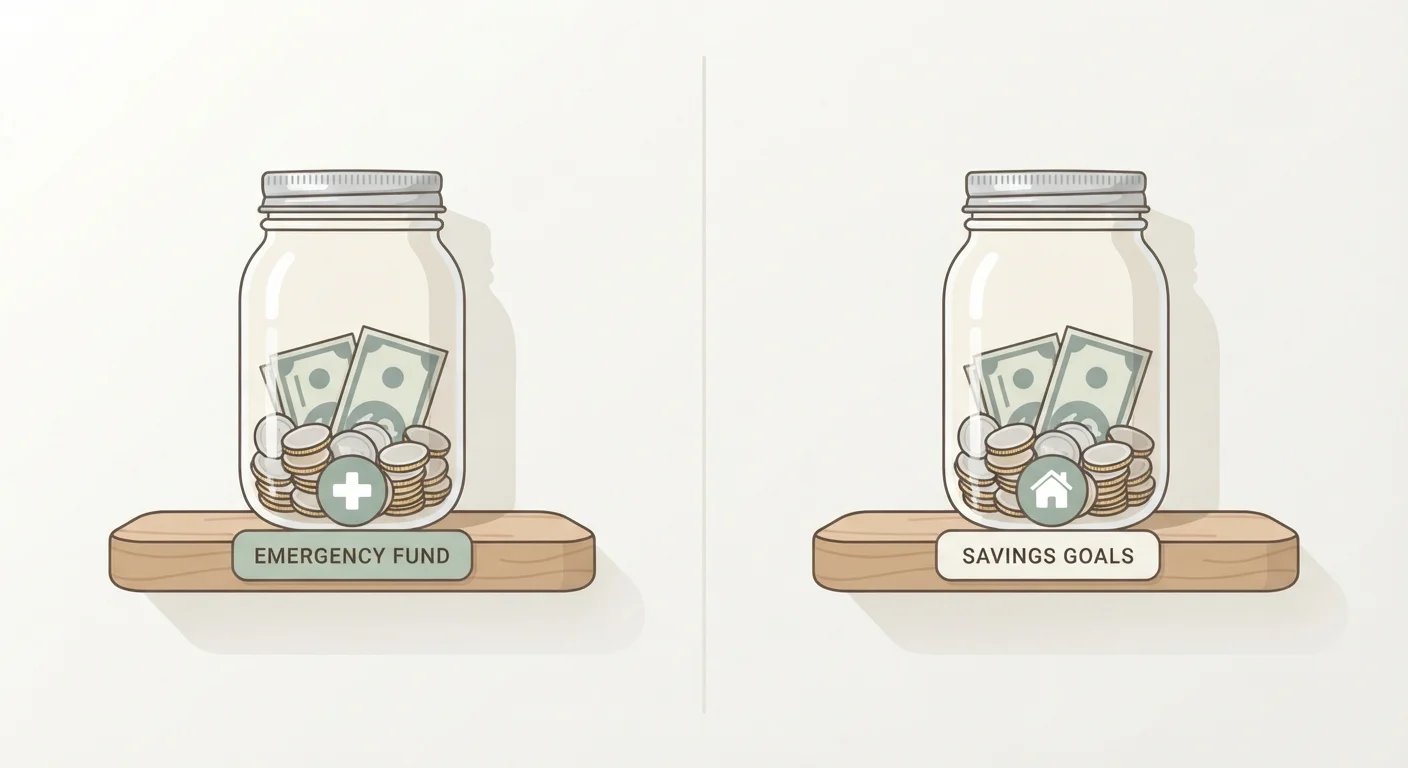
Treating these as interchangeable can quietly erode your financial safety net. If your emergency fund and your vacation savings sit in the same account with no separation, a stressful moment makes it easy to spend the emergency reserve on something that is not actually an emergency.
Separation, even if it is just a mental label or a second account, creates a friction point. That pause between seeing the money and spending it is often enough to make you reconsider.
Common saving myths can also muddy this distinction. Some people assume any money in a savings account counts as an emergency fund. Others assume they need a separate, special account. Neither is quite right. What matters is that you have a defined amount earmarked for genuine emergencies, that you know exactly what qualifies as an emergency, and that you do not routinely withdraw from it.
One account can serve both purposes
Keeping your emergency fund in a dedicated savings account separate from your everyday checking is a common and practical approach. Some banks let you create named sub-accounts within a single savings account, which makes it easier to track different money pools without opening multiple accounts. The separation matters more than the structure.
How much to keep in each
The widely cited guideline for an emergency fund is three to six months of essential living expenses. Essential means housing, utilities, food, insurance, and minimum debt payments. It does not mean your full monthly spending on everything.
For a savings account holding goal-based money, the target depends entirely on what you are saving for. A short-term goal like a home repair fund might need a few hundred dollars. A longer goal like a down payment on a home could require tens of thousands.
Both goals can live in savings accounts simultaneously if you track them separately, either in two accounts or through a bank that lets you create labeled sub-accounts or savings buckets.
Choosing the right setup
When comparing savings accounts to hold your emergency fund, look at two things: whether the account is FDIC-insured (or NCUA-insured at a credit union) and how quickly you can access the money. Interest rate matters, but liquidity comes first for an emergency reserve.
For goal-based savings, a higher annual percentage yield (APY) helps your money grow faster. Online banks and credit unions often post higher rates than traditional brick-and-mortar banks, though rates change with broader economic conditions and are never guaranteed to stay at any level.
Whatever account structure you choose, the goal is the same: keep your emergency reserve untouched except for genuine emergencies, and build toward your other goals separately.
This article is for general informational purposes only and is not personalized financial advice. For guidance specific to your situation, consult a licensed financial professional.