

Why these beliefs persist
Money myths are not random. Most of them started as a reasonable-sounding shortcut, or as advice that applied to a different era or a different financial situation. The problem is that they travel well past their useful context and get repeated as general rules.
None of the myths below require a high income to correct. They require a different frame. This article covers five of the most common ones and what the evidence actually says. It is general financial information, not advice tailored to any individual's circumstances. For decisions specific to your situation, a licensed financial adviser or certified financial planner is the right resource.
The myths, and what is actually true
Myth
I will start saving once I earn more money. Right now there is not enough left over.
Fact
Saving a small amount consistently tends to produce better results than waiting to save a large amount later.
This belief assumes that the obstacle to saving is income. For many people, it is not. Spending tends to expand to meet whatever income arrives, a pattern sometimes called lifestyle inflation. Someone earning $40,000 often feels just as stretched as someone earning $80,000 because spending rose alongside the paycheck.
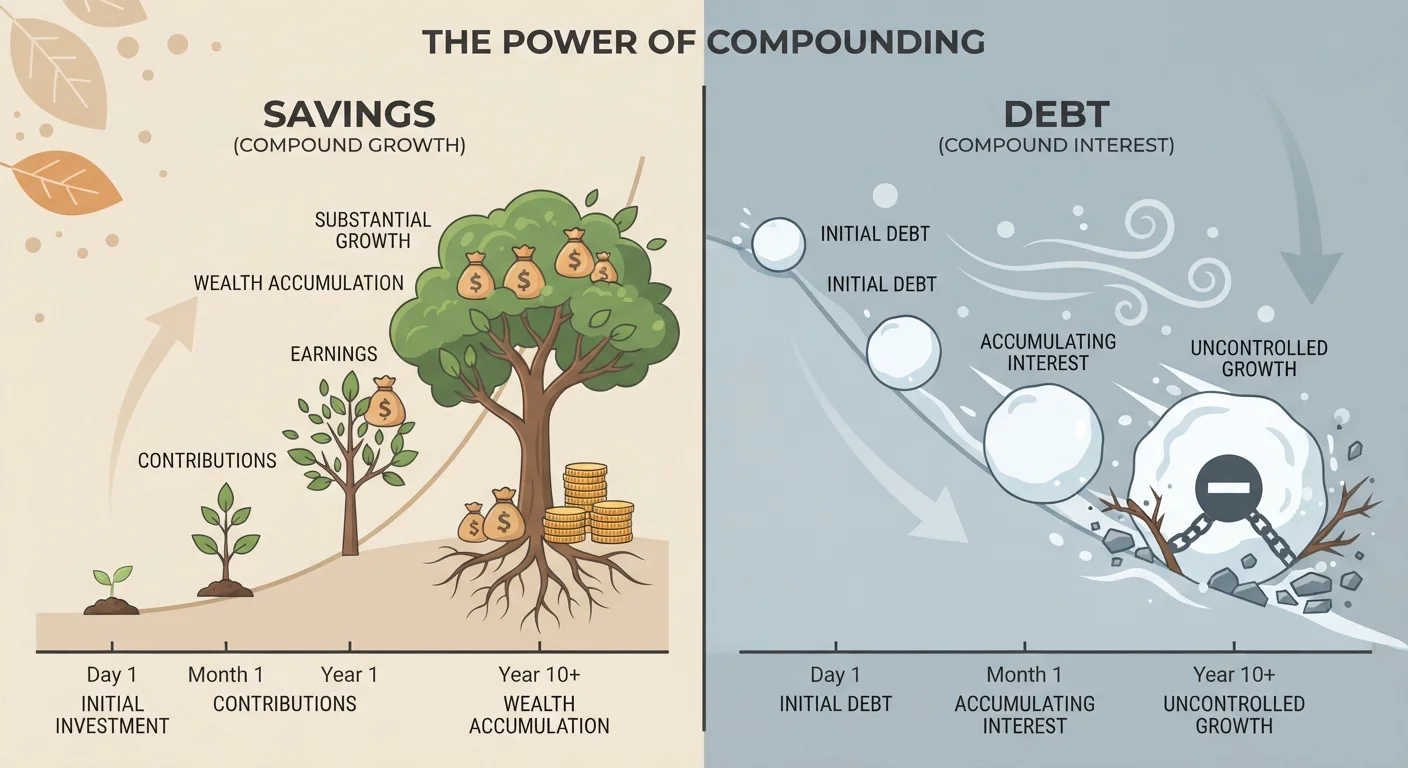
Starting with even $10 or $20 per paycheck builds the habit and lets compound interest begin working. See how compound interest works to understand why time in the market or savings account matters more than the size of any single deposit.
Myth
Keeping cash at home is safer than putting it in a bank, especially when markets are uncertain.
Fact
Cash stored at home earns nothing and loses purchasing power to inflation every year. FDIC-insured bank accounts protect deposits up to $250,000 per depositor, per institution.
Inflation reduces what a dollar buys over time. Cash sitting in a drawer or an unused checking account loses real value annually at whatever the inflation rate happens to be. A savings account, even at a modest interest rate, at least partially offsets that erosion.
The Federal Deposit Insurance Corporation (FDIC) insures deposits at member banks up to $250,000, so the security concern that drives people to hold cash at home generally does not apply to standard bank accounts. For guidance on how savings accounts and emergency funds work differently, see emergency fund vs. savings account.
Myth
You need to pay off every debt before you can start saving anything.
Fact
Carrying some debt while building a basic emergency fund is a reasonable approach for most people. Paying off high-interest debt and saving can happen at the same time.
Going all-in on debt repayment before saving anything leaves no financial buffer. When an unexpected expense arrives, such as a car repair or a medical bill, the only option is to take on new debt, which can undo months of progress.
A general approach that many financial educators suggest: build a small emergency reserve (often one month of essential expenses) while making minimum payments on debt, then direct extra funds toward high-interest balances. Once high-interest debt is cleared, redirect that payment toward savings. This is general information, not advice tailored to your situation. A licensed financial professional can help you weigh your specific circumstances.
Myth
Budgeting means you cannot spend money on anything you enjoy.
Fact
A budget is a record of income and spending. It does not mandate cuts; it shows where money is already going so you can make informed choices.
Many people avoid budgeting because they expect it to feel like a punishment. That reaction makes budgeting less likely to stick. A budget that forbids every discretionary expense is also one of the most common early mistakes people make. Common budgeting pitfalls include building a plan so rigid that one irregular expense breaks it entirely.
A more durable approach records actual spending first, identifies where the money goes, and then makes deliberate choices. Some people find that seeing the numbers is enough to shift behavior without any imposed rules.
[in_content_images:0]Myth
Investing is only for people who already have a lot of money to put in.
Fact
Many retirement accounts and investment platforms allow contributions with no minimum or a very low one. Starting small and adding regularly is a legitimate path.
Workplace retirement accounts such as 401(k) plans often accept contributions of any size from each paycheck. Individual Retirement Accounts (IRAs) have annual contribution limits but no required minimum to open one at many institutions.
The point is not the initial amount but the consistency and time horizon. Building steady money habits over years tends to matter more than timing a large lump-sum contribution. Past performance of any investment does not guarantee future results, and all investing involves risk including possible loss of principal.
This article is for informational purposes only and does not constitute personalized financial, investment, tax, or legal advice. Consult a qualified, licensed financial professional before making decisions about your own finances.