
What the fiber content line is actually telling you
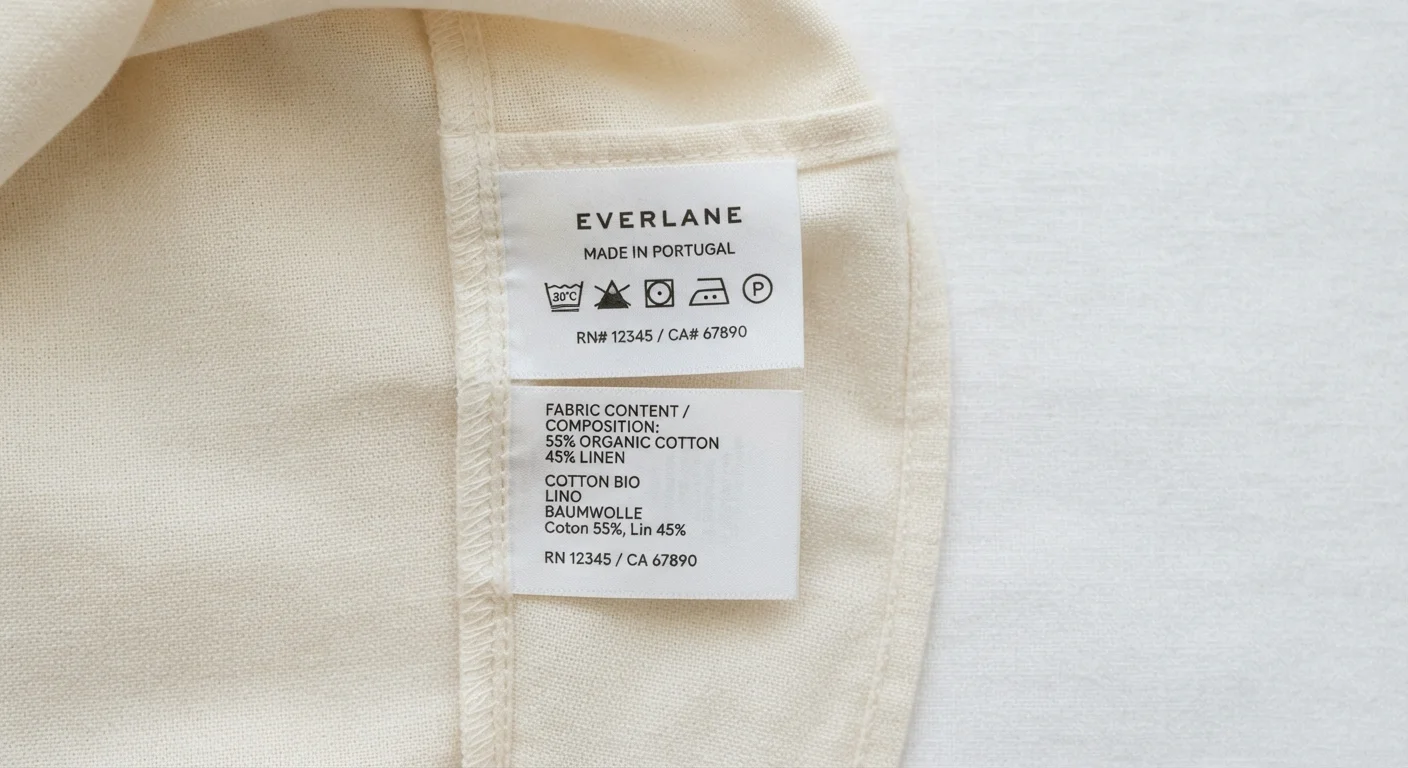
Every garment sold in the U.S. must list its fiber content by percentage, from highest to lowest, using standardized generic names. A label reading '60% cotton, 40% polyester' means cotton makes up the larger share of the fabric. That ratio matters because fibers behave differently under heat, moisture, and repeated washing.
Cotton breathes well and softens with wear, but it shrinks when exposed to high heat and wrinkles easily. Polyester holds its shape and dries fast, but it can pill over time and feels warmer against the skin. Wool insulates and resists odors, though it needs cool, gentle washing to avoid felting. Linen is strong and cool in warm weather, yet it creases sharply. Knowing what percentage of each fiber you are dealing with helps you predict how a garment will hold up and whether its care requirements fit your routine.
Blends exist because manufacturers balance the weaknesses of one fiber with the strengths of another. A small percentage of elastane (sometimes listed as spandex or Lycra) added to a rigid fabric like denim gives it stretch. A touch of nylon in a wool sock adds abrasion resistance at the heel. These additions show up on the label, and once you know what to look for, you can read a lot about a garment's intended use just from those percentages.
For a broader look at how fiber choices connect to long-term value, see why fabric quality affects cost-per-wear.
Reading care symbols without a decoder ring
The small symbols printed or woven onto care labels follow an international standard maintained by ASTM International and mirrored across most global markets. There are five base symbols: a washtub for washing, a triangle for bleaching, a square for drying, an iron shape for ironing, and a circle for dry cleaning. Modifications inside or around each symbol add detail.
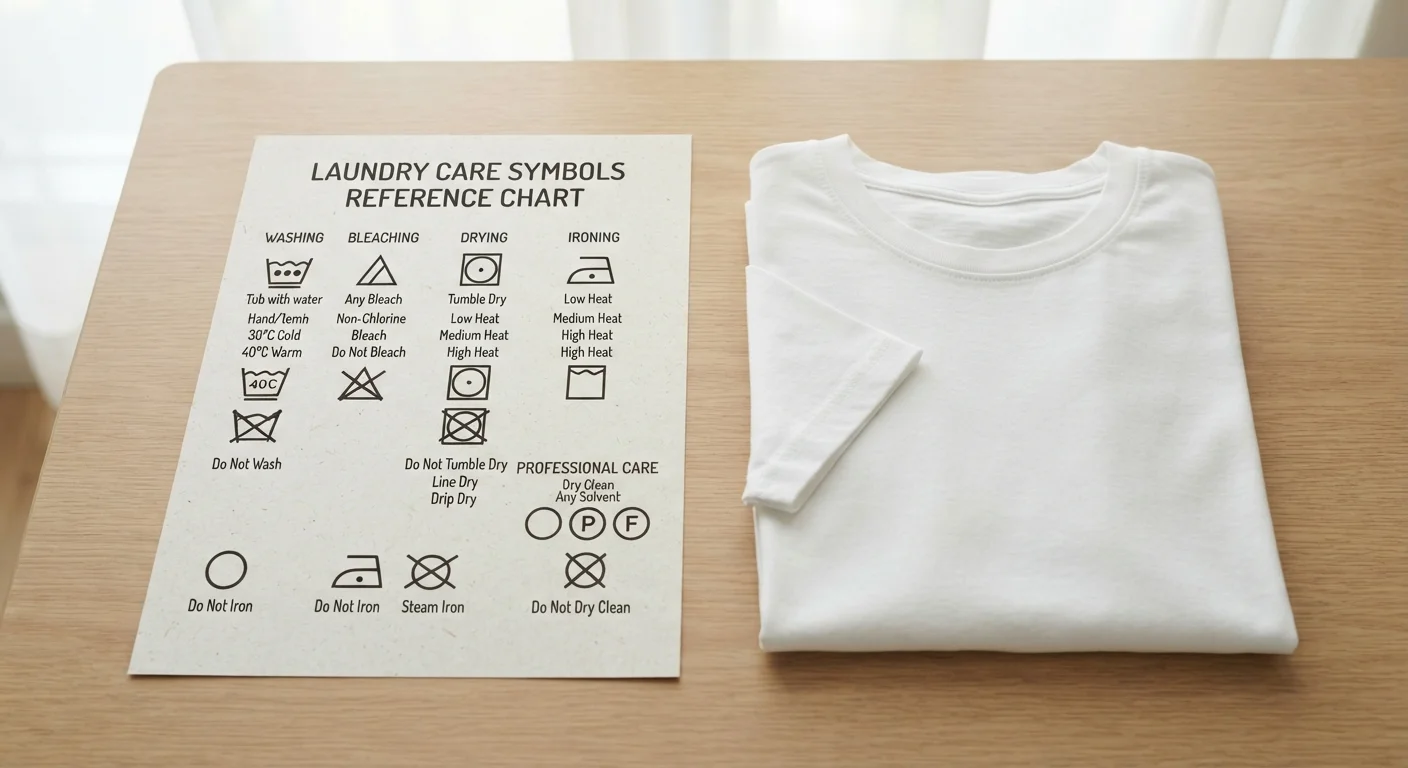
A number inside the washtub symbol indicates the maximum water temperature in Celsius. A hand drawn inside it means hand wash only. An X through any symbol means do not perform that action. One dot inside the iron means low heat; three dots mean high heat is safe. A circle inside a square on the drying symbol means tumble dry is acceptable; the square alone with a curved line at the top means lay flat to dry.
You do not need to memorize every variation. Learning the five base symbols and the meaning of an X and a dot covers the situations you will encounter most often. Following care instructions consistently is one of the simplest ways to extend the life of a garment.
Photograph the label before removing a tag
Once you cut out an itchy tag, the care information is gone. Take a quick photo of the label with your phone before removing it and save it in a folder by garment type. You will have the washing instructions whenever you need them without the discomfort of keeping the tag attached.
Other information on the label and what it means
Beyond fiber content and care symbols, U.S. law requires labels to state the country of origin and identify the manufacturer or importer by name or registered number. Country of origin refers to where the garment was cut and sewn, not where the fiber was grown or the yarn was spun. A shirt assembled in one country may use fabric woven in another; the label reflects only the final assembly location.
The manufacturer's name or RN (Registered Number) on the label is a code the FTC assigns to U.S. companies. If a label shows an RN rather than a full company name, you can look that number up through the FTC's public database to identify the brand. This comes in handy when a garment has a store label sewn over the original, which happens frequently with private-label clothing at large retailers.
Size information on labels is not federally standardized for most adult clothing categories, which is why a size 10 at one store fits differently than a size 10 at another. The label gives you a starting point, not a guarantee. Sizing inconsistency across brands is a separate issue worth understanding before you shop, especially online.
Some garments also carry voluntary certifications printed on or near the main label: organic content standards, recycled fiber verification, or chemical safety testing marks. These are not required by law, so their presence or absence is a choice the manufacturer made. A missing certification does not mean a garment is unsafe; a present one means a third party has verified a specific claim.