
Where body-shape rules come from
The body-shape dressing framework entered mainstream American fashion media in the mid-twentieth century and spread through women's magazines, department store style guides, and later, online content. The core premise is that identifying your body's proportions lets you choose clothes that create visual balance. That premise is not entirely wrong. Proportion does affect how clothing reads. The problem is that the rules built on top of it became prescriptive, negative, and heavily tied to a single beauty ideal.
Most body-shape guidelines were written to help readers minimize or hide certain features rather than dress comfortably or expressively. That framing treats natural body variation as a styling problem. It also assumes that everyone shares the same goal: looking taller, slimmer, or more hourglass-shaped. Many people do not share that goal, and there is no objective reason they should.
The rules also have a consistency problem. Ask four different sources what a person with a "pear" shape should wear, and you will get overlapping but contradictory lists. That inconsistency suggests these are opinions dressed up as principles, not evidence-based guidance.
What the myths get wrong
Myth
You should dress to create an hourglass silhouette, whatever your actual shape.
Fact
The hourglass ideal reflects a specific cultural preference, not an objective styling standard. No silhouette is universally flattering.
Generations of fashion magazines promoted the hourglass as the goal all dressing should work toward. That framing treats one body proportion as the default and others as problems to solve. Styling is about proportion and fit relative to your actual frame, not about engineering a different one. Clothes that fit your measurements well and suit your activity will read as polished regardless of whether they create an hourglass line.
Myth
Horizontal stripes make you look wider, so you should avoid them if you want to appear slimmer.
Fact
Research on the so-called Helmholtz illusion, the optical effect behind this rule, shows the results are more nuanced than a flat prohibition.
A study published in Perception by Peter Thompson and Kyriaki Mikellidou found that horizontal stripes on a figure can actually make it appear taller and narrower under certain conditions, depending on stripe width and spacing. The blanket "avoid horizontal stripes" advice oversimplifies a complex visual effect. Stripe scale, contrast, and garment cut all interact. Wearing what you like and fits well is a more reliable guide than this rule.
Myth
Wearing all one color makes you look slimmer.
Fact
Monochromatic dressing creates a continuous vertical line, which affects perceived height more than perceived width. The slim-down effect is overstated.
A head-to-toe single color does reduce the visual breaks that segment the body, which can make a person appear taller. Whether that reads as "slimmer" depends heavily on the color, the fabric weight, and the individual. Dark monochromatic outfits do absorb more light, which reduces shadow contrast, but the effect is modest. Good fit, fabric drape, and proportion produce more consistent results than color strategy alone.
Myth
Petite people should only wear fitted clothing; loose or oversized silhouettes will overwhelm them.
Fact
Oversized silhouettes work on shorter frames when proportions within the outfit are considered deliberately.
The fitted-only rule for petite frames became popular when fashion trends leaned heavily toward tailored cuts. Oversized and relaxed fits have been worn successfully across all heights and frames for decades in multiple global fashion traditions. The relevant question is proportion: pairing a very voluminous top with wide-leg trousers and a shorter frame works differently than pairing the same top with slim trousers. Neither combination is wrong; they just produce different results. Understanding how sizing varies across retailers can help petite shoppers find cuts that work without defaulting to "petite" sections exclusively.
Myth
You need to know your body shape category (pear, apple, rectangle, etc.) to dress well.
Fact
Body-shape categories are a simplification. Most people do not fit neatly into one, and the advice attached to each category is inconsistent across sources.
The shape-category system was popularized in consumer fashion media as a shortcut for styling advice. The categories themselves vary by source: some systems use four shapes, others use six or more, with different names and definitions. A person classified as a "pear" by one guide might be a "figure-8" by another. The underlying advice (balance your proportions, consider where garments hit your body) is sound, but the category labels add noise rather than clarity. Learning how specific cuts interact with your actual measurements is more useful. Clothing alterations can bridge the gap when a garment's cut is close but not quite right for your frame.
Myth
Wearing heels makes any outfit look better by elongating the leg.
Fact
Heels change posture and leg line, but whether that improves an outfit depends on the outfit, the occasion, and the wearer's comfort.
The heel-as-improver rule assumes that a longer-looking leg is always the goal, which is not universally true. Flat shoes pair well with many silhouettes and are often the appropriate choice for comfort, safety, and dress code. Forcing heels into a styling formula produces outfits that look mismatched with the occasion or uncomfortable on the wearer. Dressing for the occasion is a more reliable frame than defaulting to heel height as a styling fix.

What actually helps when getting dressed
Fit is the variable with the most consistent impact on how clothing looks. A well-fitted garment in an inexpensive fabric reads better than an ill-fitting one in a premium material. Understanding fabric content helps here: fabric weight and composition affect drape, and drape affects how a silhouette falls on your frame.
Knowing where garments hit your body is useful practical knowledge. A hemline at the widest part of the calf reads differently than one above or below it. A waistband sitting at your natural waist versus your hips produces different proportions. These are neutral observations about geometry, not instructions to hide anything.
Personal comfort is a legitimate styling input. Clothes that restrict movement or require constant adjustment distract from everything else about an outfit. Comfort and appearance are not competing priorities.
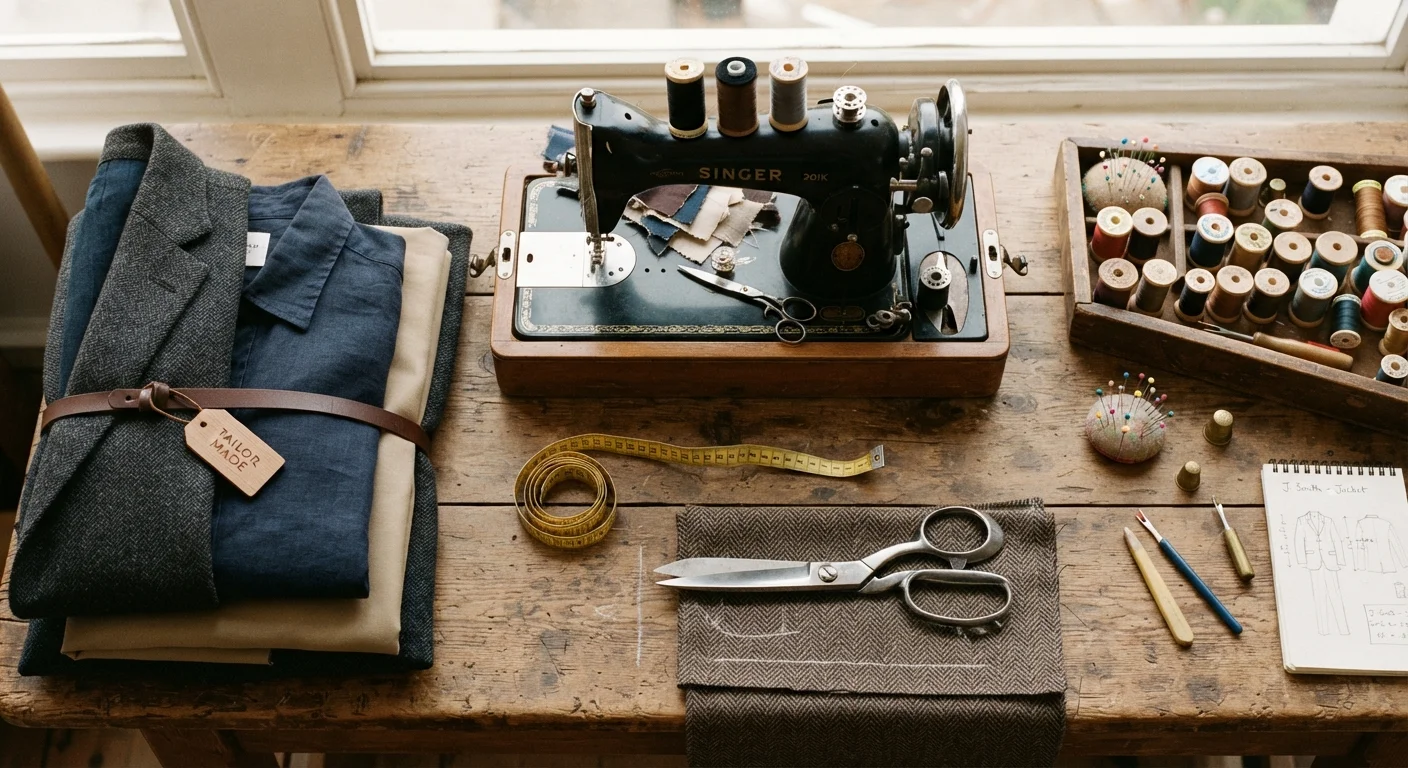
If a piece you like is close but not quite right, tailoring is often worth considering before giving up on it. Simple alterations such as hemming, taking in a waist seam, or adjusting a shoulder can transform fit at a fraction of the cost of a new garment.