

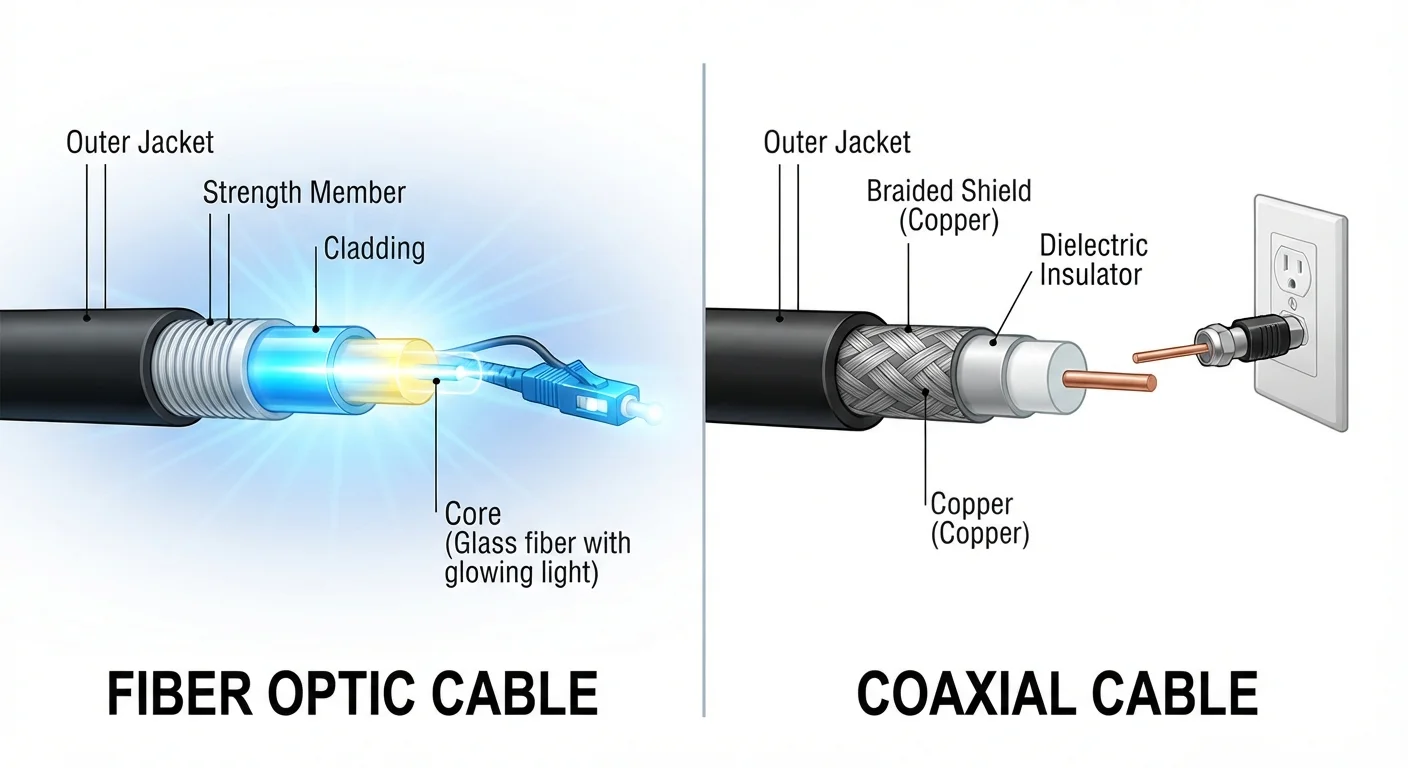
How each connection type works
Fiber internet transmits data as pulses of light through thin strands of glass or plastic. Because light travels without the resistance that affects electrical signals, fiber can carry large amounts of data over long distances with very little signal loss.
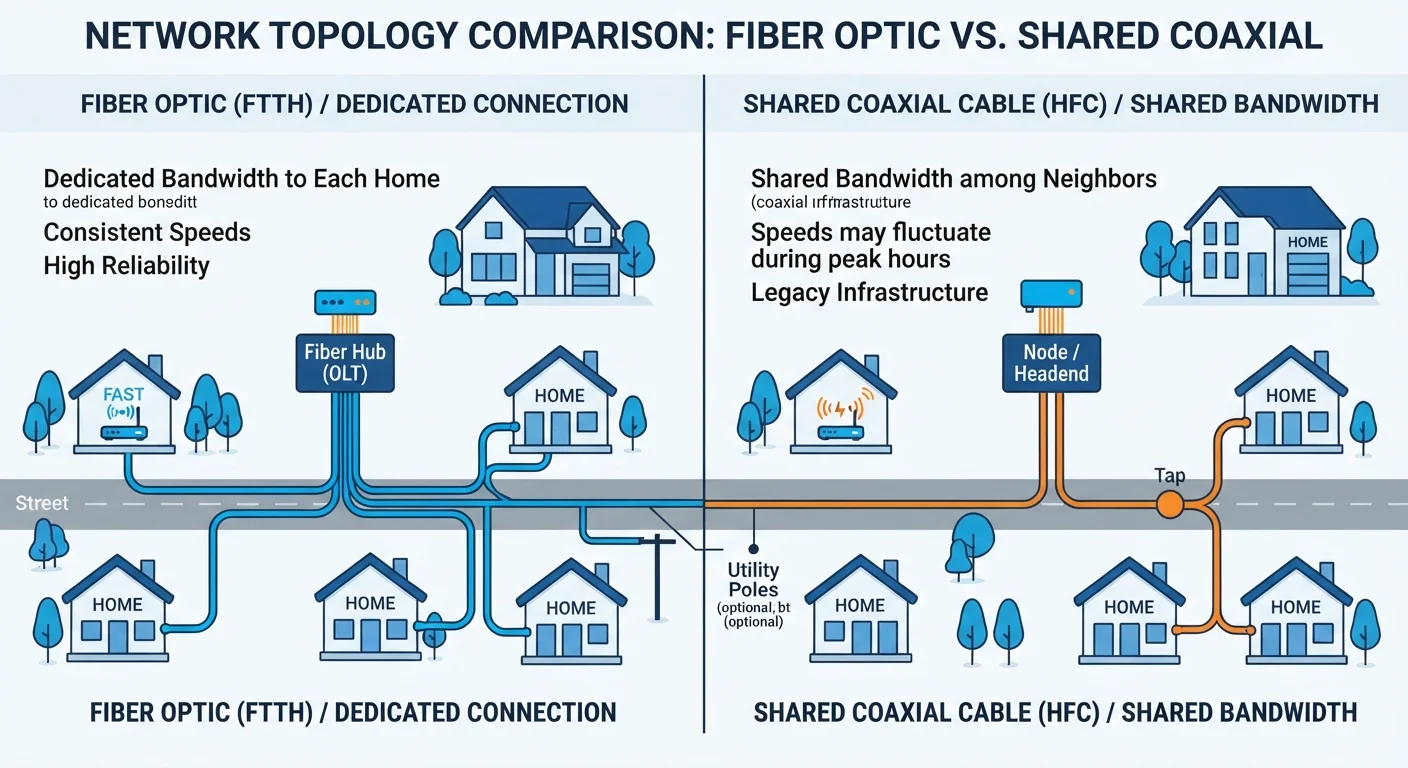
Cable internet uses coaxial cable, the same type of wiring that carries cable television signals. Data travels as electrical signals. The cable from a neighborhood node is shared among multiple homes, so the capacity on that segment is divided among whoever is active at the same moment.
That physical difference shapes everything else: speed ceilings, consistency during peak hours, and upload performance.
Speed and symmetry
Fiber plans frequently provide the same speed for uploading as for downloading. A plan advertised at 500 Mbps (megabits per second) on fiber typically means 500 Mbps in both directions. Cable plans usually offer much lower upload speeds than download speeds. A cable plan with 500 Mbps download might pair it with 20 to 50 Mbps upload.
For most streaming and browsing, download speed is what matters most. But upload speed affects video calls, cloud backups, and sending large files. If your household does any of those regularly, the gap in upload performance between fiber and cable becomes noticeable.
Fiber also tends to hold its advertised speed more consistently. Because each fiber subscriber connects through a dedicated line rather than a shared segment, heavy use by neighbors has little effect on your connection. Cable speeds can drop during evening hours when many people in the same area are online.
| Criterion | Fiber internet | Cable internet |
|---|---|---|
| How data travels | Light through glass or plastic strands | Electrical signal through coaxial cable |
| Upload vs. download speeds | Usually equal (symmetrical) | Upload typically much slower than download |
| Consistency during peak hours | Less affected by neighborhood congestion | Can slow when nearby users are active |
| U.S. availability | Growing but still limited in many areas | Broadly available across most U.S. addresses |
| Installation | Often requires new line to the home | Uses existing coaxial wiring in most homes |
| Data caps | Many plans have no data cap | Caps common on some plans |
Availability and installation
Cable internet is available to a large majority of U.S. households. The coaxial cable infrastructure was built out over decades alongside television service, so it already reaches most suburban and many rural addresses.
Fiber availability has grown, but it still reaches a smaller share of addresses. Buildout is ongoing in many cities and some rural areas, but coverage is uneven. The only reliable way to know whether fiber is available where you live is to check with providers that serve your address directly.
Installation for cable is often straightforward if coaxial outlets are already in the home. Fiber installation typically involves running a new line from the street to the house, which takes more time and may require a technician visit. Some fiber providers bury the line; others run it overhead. Either way, the process is usually a one-time setup.
Before comparing plans, review what to check before switching providers so you understand contract terms, equipment fees, and installation details.
What the numbers on a plan actually mean
Speed figures on internet plans are almost always listed as maximums, not guaranteed minimums. The phrase "up to" in a plan description means the speed under ideal conditions, which you may not always see. Understanding the terms your provider uses helps you read plan details accurately before signing up.
For a household with two to four people streaming video simultaneously, a download speed of 100 Mbps is generally enough, though more devices or 4K streams increase that need. A household with remote workers who upload large files regularly benefits from the higher upload speeds that fiber provides.
Data caps are another factor. Some cable plans limit how much data you can use in a month before speeds are slowed or extra charges apply. Many fiber plans have no data cap, though this varies by provider and plan tier.
This article is for informational purposes only. Service availability, speeds, and plan terms vary by provider and location. Verify details directly with providers that serve your address.